Ankara Active Directory Security and Privileged Access Management Guide (2026)
For many organizations in Ankara, Active Directory (AD) is the backbone of business continuity: user authentication, application access, server privileges and administrative accounts are combined in the same system. This article; It was prepared for IT managers, system experts and operations teams in SME and medium-sized companies. Our goal is to address ankara active directory security and privileged access management issues not only as a technical checklist, but as a measurable operating model.
Short Answer
The most effective approach is to: manage the identity layer (MFA, conditional access, password policy), privileged accounts (tiering, JIT/JEA, PAM), and visibility layer (log correlation, anomaly tracking, audit trail) together. When these three layers are operated together in companies in Ankara, the risk of account takeover decreases, the effect of interruption decreases and audit processes are managed faster.
Brief Summary
- Verizon 2025 DBIR analyzed 22,052 incidents and 12,195 substantiated breaches.
- In the same report, the share of third-party effective breaches increased from 15% to 30%.
- According to Verizon, the increase in initial vectors due to vulnerability exploitation is 34%.
- Microsoft reports that it blocks more than 600 million identity attacks per day at its customers.
- According to the Microsoft Digital Defense Report, more than 99% of daily identity attacks are password-based.
- Microsoft's reported blocking volume is approximately 7,000 password attacks per second.
- According to the Turkish Ministry of Transport and Infrastructure post, USOM blocked approximately 1.1 billion malicious access requests in January 2025.
- CISA recommends standardizing phishing-resistant MFA and basic access controls across the organization in identity security.
Contents
- Who is this guide for?
- Why is AD security a management issue in Ankara?
- The 6 most common risk areas
- Operational framework for privileged access
- Classic admin model vs privilege-oriented model
- Weekly KPI dashboard
- Copiable checklist
- Where to start with Leon-X?
- Frequently asked questions

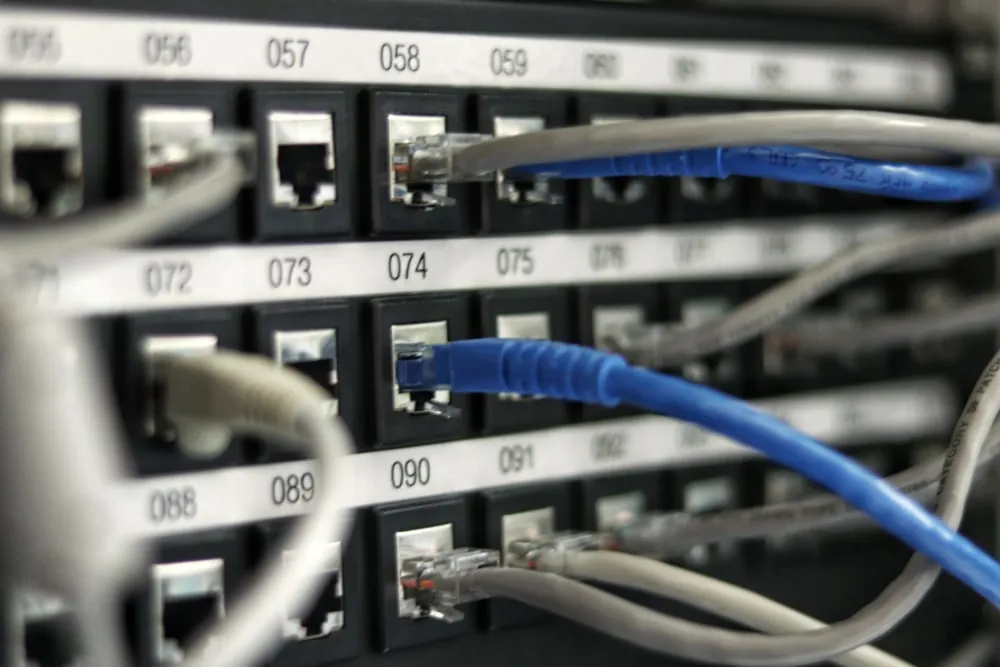
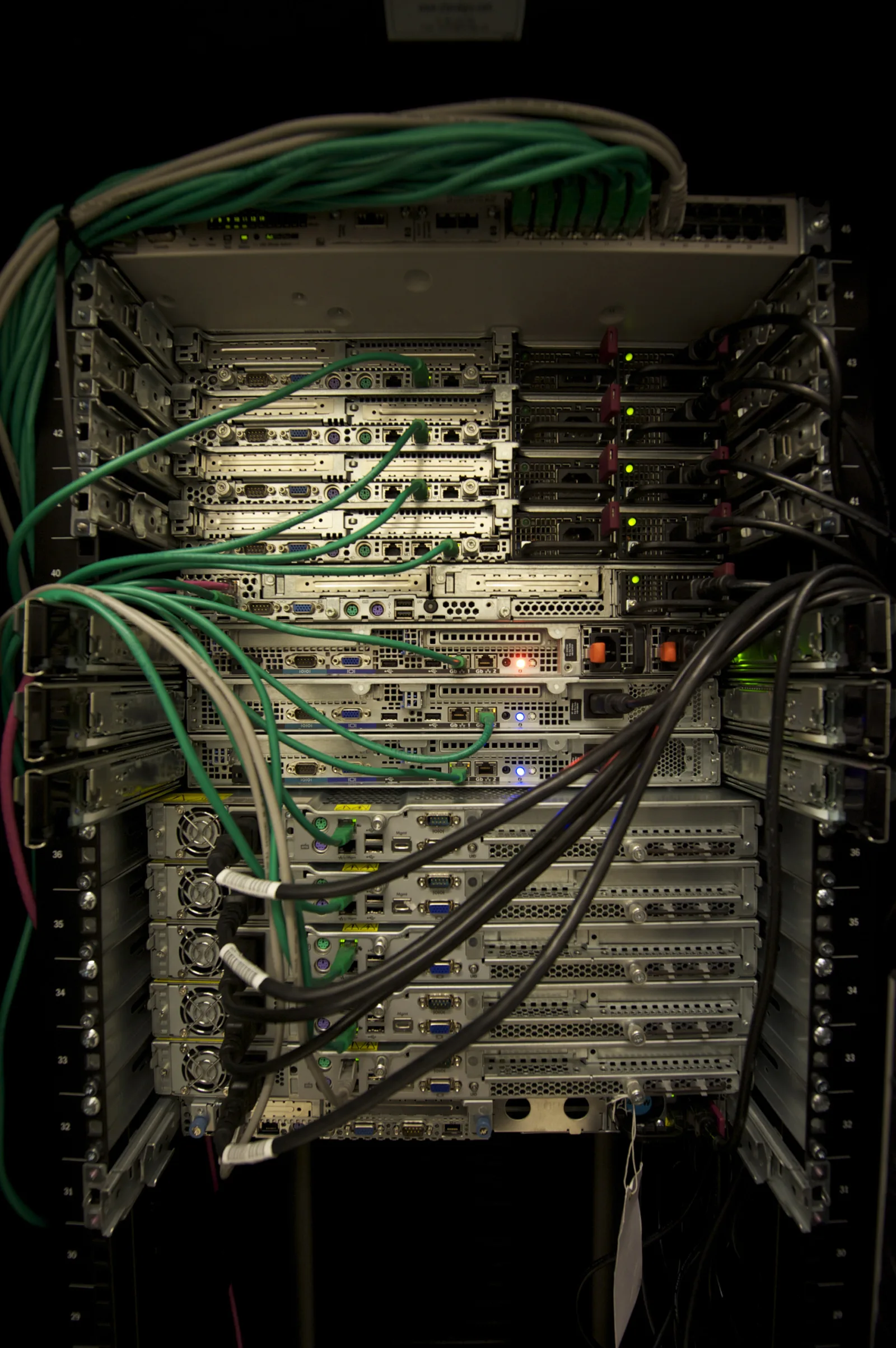
Image: Pexels - Data center and server infrastructure.
Who is this guide for?
This content is specifically aimed at the following teams:
- SMEs and medium-sized institutions operating in Ankara with 50-1000 employees
- IT teams that simultaneously manage hybrid working, remote access and external supplier connections
- Technical leaders who jointly manage AD, Entra ID, VPN, email security, and endpoint security
- Administrators who want to maintain verifiable access records due to audit and compliance requirements
On the search intent side, this content carries both informative and commercial intent. So “what controls are required?” While answering the question "How do we make this work in our institution?" It also provides a clear framework for the question.
Why is AD security a management issue in Ankara?
IT architecture in institutions in Ankara often does not consist of a single data center. Head office, field locations, production environments, external access requirements and authorization needs of different business units meet on the same identity layer. As this structure grows, technical risk becomes managerial risk.
For example, having a single domain admin account with excessive privileges is not just a security vulnerability; It is also a business continuity risk. When the account is compromised, the domain expands, incident response time increases, and business units experience operational interruptions. Therefore, the ankara privileged access management approach is not only the job of the security team; IT operations, management and compliance teams should have a common agenda.
The fact that NIST CSF 2.0 highlights the “Govern” function as a separate column also supports this point: identity security is not a technical checklist, but a matter of corporate governance.
The 6 most common risk areas
1) Permanent and broad authority admin accounts
The use of overly authorized accounts in daily work allows the attacker to make extensive lateral movements with a single account.
2) MFA exceptions to privileged access
MFA exceptions left for fear of “service interruption” are the weakest link on the most critical accounts.
3) Legacy protocol and legacy identity flows
NTLM fallback, outdated authentication methods, or uncontrolled legacy applications weaken identity security.
4) Lack of password rotation on service accounts
Service accounts that cannot reset passwords can become long-lived permanent access points for an attacker.
5) There is log but no correlation
When AD, firewall, endpoint and e-mail logs remain on different platforms, the chain of events is noticed late.
6) Person-based authority management instead of role-based authority matrix
The personalized access model is unsustainable. “Accumulation of authority” occurs during team changes and task rotations.
Operational framework for privileged access
The framework below is operational focused, not time focused. The aim is not to establish a one-time project, but to establish a permanent control mechanism.
1) Identity Core Security Layer
- Mandatory MFA on privileged accounts
- Conditional access policies (location, device reliability, risk level)
- Standardization of password, login and account lockout policies according to corporate risk appetite
- Inventory and mitigate legacy authentication protocols
2) Privilege Management Layer
- Tiered admin model (Tier 0 / Tier 1 / Tier 2)
- JIT (Just-In-Time) and JEA (Just-Enough-Administration) principles
- Limiting and periodic testing of break-glass calculations
- Automatic password rotation on service accounts
3) Visibility and Interference Layer
- Normalized transfer of AD security logs to SIEM
- Anomaly alarm in case of unsuccessful login, privileged login and group membership changes
- Incident response runbooks: account isolation, token revocation, session termination
- Audit trail: standardization of the who-when-accessed-with-what-authority report
4) Governance and Continuity Layer
- Monthly privilege review meeting
- Quarterly access certification
- Automatic deprovision process for terminated users
- Risk score + improvement backlog in the management panel
Classic admin model vs privilege-oriented model
| Model | Operation Effect | Security Risk | Audit Preparation |
|---|---|---|---|
| Classic single admin group | Fast in the short term, fragile in the long term | High | Low |
| Partial MFA + manual authorization management | Middle | medium-high | Middle |
| Tiered admin + JIT/JEA + central log | Controlled and scalable | Low | High |
| Privilege + governance + regular certification | Continuous improvement possible | Lowest operational risk | very high |
In this table, the goal is not to "get the most tools", but to take critical access under measurable control.
Weekly KPI dashboard
To translate AD security and privileged access management into business language, the following set of metrics provides a sufficient start:
- Number of Privileged Accounts (piece) Goal: role-based optimization instead of person-based increase.
- MFA Scope (%) Approaching 100%, especially in Tier 0 and Tier 1 accounts.
- Authority Certification Completion Rate (%) Rate of accesses with administrative approval completed.
- Service Account Password Rotation Compliance Rate (%)
- Abnormal Login Event Detection Time (minutes)
- First Response Time (minutes)
- Critical Group Membership Change Review Time (hours)
It is effective to keep KPI reporting at two levels:
- Weekly operations dashboard for technical team
- Monthly risk and action summary for management
Copiable checklist
- Tier 0 asset and account list is up to date.
- MFA is mandatory for privileged accounts and exceptions are registered.
- Break-glass calculations are defined, usage tests are documented.
- Domain admin memberships have been cleared for unnecessary users.
- Automated password rotation for service accounts.
- AD logs are transferred to SIEM in normalized form.
- Alarm rules for critical ID events are active.
- Deprovision automation is working for users who quit.
- Monthly authorization review meeting is held regularly.
- Evidence set (access report + change trace) ready for audit.
Where to start with Leon-X?
The best start for Active Directory security in Ankara is to make the current privilege structure and identity risks visible through a quick "current situation" analysis. At this stage, the aim is not to sell vehicles; The aim is to clarify which control reduces which risk.
Related pages:
This model is especially designed for teams looking for practical application in the searches "ankara active directory security", "ankara privileged access management" and "ankara identity access management".
Frequently asked questions
Is Active Directory security critical only for large companies?
No. The impact is felt faster in SMEs and medium-sized institutions; because a single privileged account problem can stop the entire operation. Even if the scale is small, the identity layer is key to critical systems.
Would just opening an MFA be enough?
It is not enough alone. MFA is a powerful control layer, but without privilege mitigation, log monitoring, service account management, and incident response processes, the risk remains significant.
Can improvement be made without a PAM solution?
Yes. Significant gains can be achieved through tiering, authority minimization, JIT/JEA principles and regular certification processes. PAM is the layer that increases the maturity level of this model.
What evidence is most requested during audits?
Privileged account list, authorization change records, MFA coverage report, access approval history, and incident response traces are the most requested evidence sets.
Conclusion
Active Directory security and privileged access management in Ankara is not only about preventing attacks; Operation continuity is at the center of compliance and management quality. Organizations that manage identity, privilege and visibility layers together experience fewer surprises, make faster decisions and pass audit processes with less operational cost.
To create an institution-specific access security framework, you can contact us on our contact page.
Resources
- Verizon - 2025 Data Breach Investigations Report announcement
- Microsoft - Digital Defense Report 2024
- CISA - Cross-Sector Cybersecurity Performance Goals (CPGs)
- CISA - Implementing Phishing-Resistant MFA
- NIST - Cybersecurity Framework 2.0
- NIST - SP 800-63B Digital Identity Guidelines
- Ministry of Transport and Infrastructure - USOM January 2025 statistics sharing
- Pexels - Data rack photo