Business Continuity Plan in Ankara: BCP/DRP Guide for SMEs (2026)
For companies operating in Ankara, a business continuity plan is no longer a "nice to have" issue, but a direct issue of revenue, customer confidence and operational continuity. This article; Created to reduce the cost of outage, clarify disaster recovery preparedness, and give your technical teams an actionable roadmap.
This guide is specifically for the following teams:
- IT administrators and system administrators
- Operations and finance managers
- SME owners and general managers
Short Answer
BCP (Business Continuity Plan) defines how the business will continue, and DRP (Disaster Recovery Plan) defines how long it will take for the systems to return. The right approach for SMEs in Ankara is to combine these two plans within a single management framework and manage them with measurable targets (RTO/RPO).
Contents
- Why did BCP/DRP priority increase in Ankara?
- BCP and DRP difference: which plan solves what?
- How are RTO and RPO calculated?
- 90-day BCP/DRP implementation plan
- Copiable BCP/DRP checklist
- Frequently asked questions
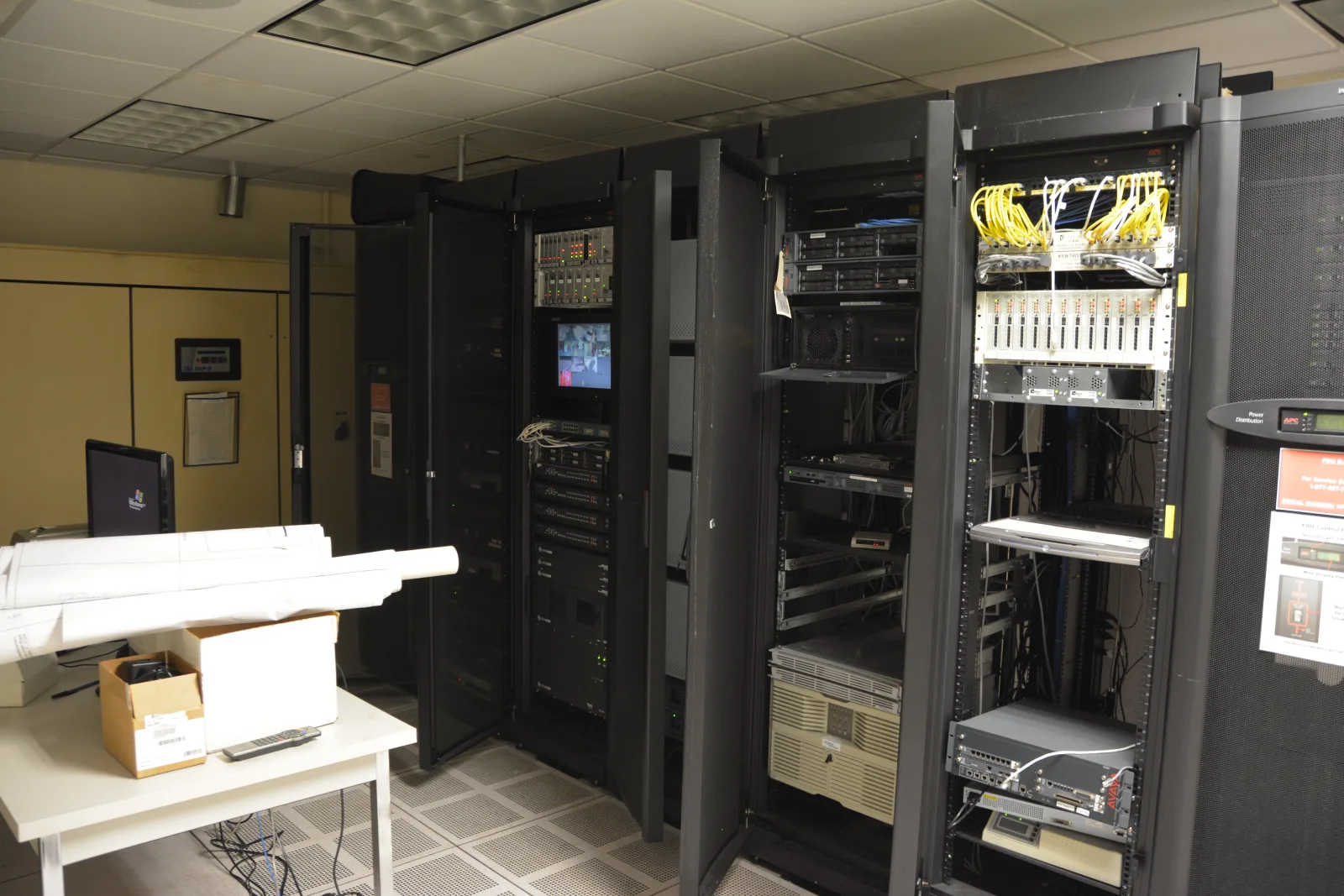
Image: Server Room (Wikimedia Commons, CC BY 2.0).
Why did BCP/DRP priority increase in Ankara?
For institutions in Ankara, technology outages are not just a technical problem; It is a crisis that simultaneously affects sales, operations, human resources, customer service and supply chain. The indicators in the Ankara Development Agency's 2025-2028 Regional Plan also clearly show the economic weight of the region: GDP per capita is 18,655 USD in Ankara, Türkiye's average is 13,243 USD; Additionally, Ankara's national GDP share has increased to 9.6%. In other words, even an outage measured in minutes in Ankara becomes more expensive in terms of business impact.
Global data also supports the picture. According to IBM's 2025 Cost of a Data Breach report, the average cost of a data breach is approximately 4.4 million USD. In the Verizon 2025 DBIR report, 22,000+ security incidents and 12,195 confirmed breaches were analyzed; The annual increase in breaches caused by vulnerability exploitation was reported as 34%, and the rate of breaches due to ransomware was reported as 44%.
This data tells us three things:
- Disruption is no longer the exception, but an expected risk.
- Attack types are progressing faster and more automation-oriented.
- Companies without a plan are locked out not only technically but also organizationally at the time of the incident.
BCP and DRP difference: which plan solves what?
Most organizations think “there is a backup, no problem”. However, having a backup alone does not mean business continuity.
What does BCP (Business Continuity Plan) cover?
BCP describes how the company's critical functions will continue during an outage. Example titles:
- Priority business processes (sales, operations, finance)
- Crisis communication chain
- Manual or alternative processes
- Supplier and third party dependencies
- Management decision and approval flow
What does DRP (Disaster Recovery Plan) cover?
DRP describes in what order and in what target time the technical systems will return:
- Server, database and application return order
- Replication/backup resources
- Test scenarios
- Rollback plan
- RTO and RPO targets
Brief comparison
| Subject | BCP | DRP |
|---|---|---|
| main focus | Continuation of business operation | Return of IT systems |
| responsible team | Management + operations + IT | IT + security + infrastructure |
| Output | Process and decision plan | Technical restoration plan |
| KPI | Service continuity, customer impact | RTO, RPO, recovery success rate |
Important: The BCP and DRP may be separate documents, but in practice they should operate under a single crisis management structure.
How are RTO and RPO calculated?
RTO (Recovery Time Objective)
It is the maximum acceptable downtime of a system.
- Example: RTO for ERP = 2 hours
- Meaning: After the interruption, ERP should recover within 2 hours at the latest.
RPO (Recovery Point Objective)
It is the maximum acceptable data loss window.
- Example: RPO = 15 minutes
- Meaning: A maximum of the last 15 minutes of data loss is tolerated.
Practical calculation method
- List critical processes (e.g. ordering, invoicing, production).
- For each process, “What is the effect if it stops for 1 hour?” Evaluate the question on TL basis.
- Map dependent systems (e.g. CRM, ERP, email, VPN).
- Assign target RTO/RPO for each system.
- Test whether the goal is realistic.
Example target matrix:
| System | Business Impact | Target RTO | Target RPO |
|---|---|---|---|
| ERP | very high | 2 hours | 15 min |
| High | 4 hours | 30 min | |
| file server | Middle | 8 hours | 2 hours |
| test environment | Low | 24 hours | 24 hours |
The most critical point in this table is that each target is verified by testing. CISA's ransomware preparedness guide for small businesses also emphasizes regular offline/discrete backup and recovery testing.
90-day BCP/DRP implementation plan
The plan below is the model that gives the fastest results in SMEs in Ankara.
Phase 1 (Day 1-15): Discovery and prioritization
- Classify critical business processes (A, B, C priority).
- Inventory assets: server, network device, SaaS, endpoint.
- Identify single points of failure.
- Create a crisis contact list.
Output:
- First risk map
- Critical system list
- Draft RTO/RPO targets
Phase 2 (Day 16-45): Technical preparation and documentation
- Redesign backup policy with 3-2-1 approach.
- Verify replication and alternate run environment.
- Write “system rollback runbook” documentation.
- Clarify access authorizations and emergency accounting procedures.
Output:
- Current BCP draft
- DRP runbook set
- Test scenarios
Phase 3 (Days 46-90): Testing, training and improvement
- Do a tabletop exercise.
- Apply technical reversal testing and measure times.
- Conduct a decision exercise with the management team.
- Create an improvement backlog for missing points.
Output:
- test report
- Measured RTO/RPO
- Revised BCP/DRP document
Practice frequency recommendation
| Test Type | Recommended Frequency | Aim |
|---|---|---|
| Desktop crisis exercise | 1 in 3 months | Decision and communication flow |
| Partial technical restore | 1 per month | Runbook verification |
| Full critical system exercise | 1 in 6 months | True RTO/RPO measurement |
| Supplier communication rehearsal | 1 in 6 months | External dependency resilience |
Operational reality for Ankara: process discipline, not just technology
There is a similar situation in many institutions in Ankara: technical infrastructure is at a certain level, but process standardization lags behind. As a result, the biggest loss during an outage is "not knowing what to do" rather than the system shutting down.
So a good BCP/DRP framework should manage these three layers together:
- Technical layer: backup, replication, access, security
- Process layer: escalation, approval, communication, reporting
- Human layer: role clarity, training, exercise discipline
This model; It makes the operation more predictable for SMEs that grow in Ankara and work with multiple locations or hybrids.
Copiable BCP/DRP checklist
You can use the following list directly in the team meeting:
- Critical business processes are classified according to impact level.
- Connected IT systems are mapped for each critical process.
- System-based RTO and RPO targets were defined.
- Backup strategy updated to 3-2-1 model.
- Offline/discrete backup copy verified.
- Technical feedback runbooks were written.
- Crisis communication chain and approval flow were documented.
- At least 1 desktop exercise was conducted.
- At least 1 technical restoration test measured.
- Post-test improvement items were added to the backlog.
How can you get started with Leon-X?
If you want to establish a business continuity plan in Ankara, the best step to start is the "quick discovery + prioritization" study. The first goal in this study is not to perfect the entire system at once; The business impact is to reduce the highest risks in the first 30 days.
Related service pages:
Additional readings:
- Managed IT Services: 2026 Guide for SMEs
- Cyber Security Consultancy: 2026 Checklist for SMEs in Ankara
Frequently asked questions
Should we keep BCP and DRP in one file?
It varies depending on the scale of the institution. It facilitates single-roof document management in small teams. In medium-sized structures, it would be more sustainable to keep BCP and DRP separate and link them under a single crisis management procedure.
How should we determine the RTO target?
RTO should be determined based on business impact, not technical capability. First, "what will we lose if this system stops for 1 hour?" The question should be answered, then the technical architecture should be designed according to this goal.
Why isn't backup alone enough?
Because a backup whose restore time is not measured may not work in a crisis. Real readiness consists of backup + runbook + chain of responsibility, verified by regular testing.
What is the minimum exercise frequency for SMEs in Ankara?
Practical entry level: 1 partial rollback test per month, 1 desktop crisis exercise every 3 months, 1 critical system full exercise every 6 months. This rhythm produces corporate reflexes without exceeding the team load.
Conclusion
Preparing a business continuity plan in Ankara is not only the job of the IT team; It is the joint responsibility of management, operations and technical teams. When BCP/DRP is designed correctly, your company will be wondering “what do we do if there is an outage?” from the question “In what target time will we recover?” goes to level.
If you wish, let us evaluate your current infrastructure together and create a 90-day BCP/DRP road map specific to your institution. For the first step, you can contact us on our contact page.
Resources
- IBM — Cost of a Data Breach Report 2025
- Verizon — 2025 Data Breach Investigations Report
- CISA — Ransomware Guide
- CISA — Small Business Guide: Backups and Recovery
- NIST — SP 800-34 Rev.1 Contingency Planning Guide
- Ankara Development Agency — 2025-2028 Ankara Regional Plan
- Wikimedia Commons — Server Room (22397102849)