A VMware cluster design guide is not just about grouping a few hosts under the same vCenter. The real issue is balancing capacity, performance, availability, and operational manageability inside one design model. The short answer is this: in the March 3, 2025 context, a healthy VMware cluster design requires preserving host homogeneity, planning capacity not only for today but also for failure scenarios, thinking about HA and DRS together, making network and datastore dependencies visible, and keeping the cluster simple enough for the operations team to manage. This guide is written for teams that want a more disciplined VMware cluster architecture.
This article is especially for:
- VMware administrators
- infrastructure and systems architecture teams
- IT managers planning a new cluster
- organizations expanding or redesigning an existing cluster
Quick Summary
- Cluster design is not only a host-count decision; it is also a fault-tolerance and operating-model decision.
- A homogenous host structure makes capacity and DRS behavior more predictable.
- HA and DRS are not separate checkboxes; they are two critical layers of the same design.
- Network and datastore dependencies should be mapped early inside the cluster model.
- Capacity planning without N+1-style thinking often creates surprise pressure during failures.
- That is why strong cluster design should produce simplicity and visibility, not just raw performance.
Table of Contents
- Where Does Cluster Design Start?
- Why Is Host Homogeneity Critical?
- How Should Capacity Be Planned?
- How Should HA and DRS Be Considered Together?
- How Should Network and Storage Be Treated?
- A Practical 20-Minute Cluster Health Review
- Frequently Asked Questions

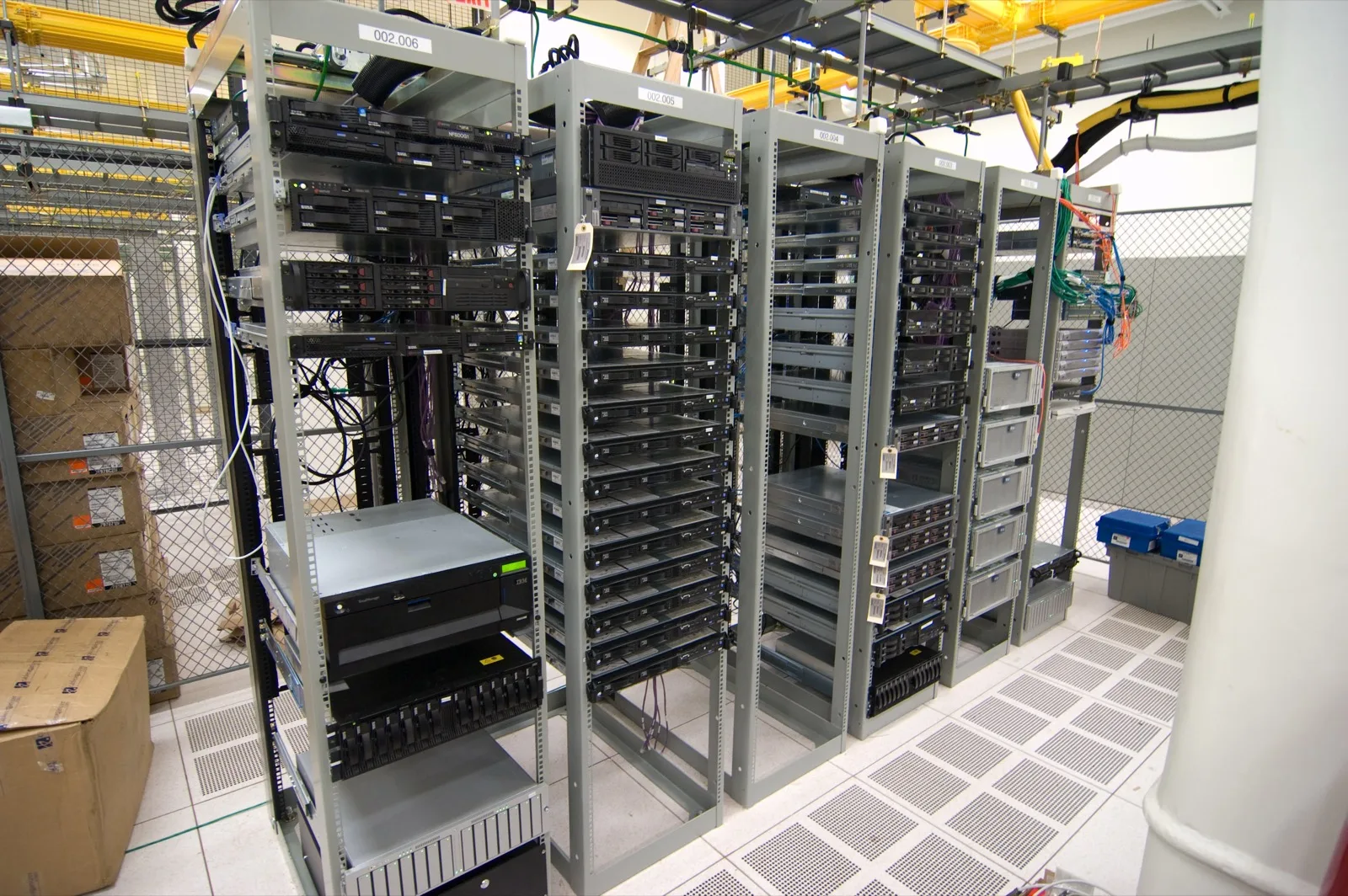
Image: Wikimedia Commons - BalticServers data center.
Where Does Cluster Design Start?
The first step in cluster design is not the product screen. It is defining design boundaries. The number of hosts matters, but so do questions like:
- which workloads must survive a host failure
- whether maintenance windows will create resource pressure
- which virtual machines truly belong in the same cluster
- whether the operations team can manage the cluster without added complexity
Good cluster design is judged not only in normal operation, but also during maintenance, host loss, and rapid growth.
Why Is Host Homogeneity Critical?
One of the most common design problems in VMware clusters is placing very different host generations or capacity profiles under the same operating expectations. Just because something is technically supported does not mean it is architecturally sound.
Host homogeneity improves:
- DRS predictability
- capacity planning clarity
- maintenance and expansion workflows
- performance consistency
If a cluster mixes very different resource profiles, the total capacity may look sufficient on paper while still behaving unevenly in production.
How Should Capacity Be Planned?
Cluster capacity should not be planned by summing CPU and memory alone. The more important question is how the system behaves when one host is unavailable or during planned maintenance.
That is why capacity planning should consider:
- normal operational load
- N+1 or equivalent fault-tolerance expectation
- growth trend
- bursty workloads with uneven demand
The common mistake is designing for “it fits today.” Cluster design should be validated against failure behavior, not only steady state.
How Should HA and DRS Be Considered Together?
In VMware clusters, HA and DRS should not be treated as separate features turned on independently. HA focuses on protecting workloads during failures, while DRS aims to keep resource placement sustainable and balanced.
Teams should evaluate:
- whether enough headroom exists for HA behavior
- whether DRS rules simplify operations or introduce more complexity
- whether placement policies are clear for critical workloads
- whether automatic behavior produces the expected result during host loss
It is not enough that the features are enabled. The team needs to understand how they behave together.
How Should Network and Storage Be Treated?
Cluster design is shaped as much by networking and storage as by compute. Management, vMotion, storage, and production traffic should be planned deliberately rather than assumed to work by default.
The same applies to datastore design:
- do all hosts have correct visibility to critical datastores
- will storage performance remain stable as the cluster grows
- do vMotion and placement decisions align with storage behavior
If a cluster is evaluated only through CPU and memory, many real bottlenecks remain hidden.
A Practical 20-Minute Cluster Health Review
To review a cluster design quickly:
- Check how homogenous the host hardware profiles are.
- Calculate remaining capacity after one host loss.
- Review whether HA and DRS settings match workload priorities.
- Confirm network segmentation and vMotion or management separation.
- Verify host access to critical datastores.
- Note whether recent maintenance or fault events behaved as expected.
Even this short review often reveals the weakest architectural point.
Related Content
- How to Set Up VMware Disaster Recovery
- What Is VMware Replication?
- VMware Storage Architecture Best Practices
Next Step with Leon-X
When a cluster is designed well, organizations manage not only current workloads but also failure and growth scenarios more confidently. Leon-X helps teams design more usable VMware cluster architectures through capacity planning, HA/DRS balance, host standardization, and dependency visibility.
Related pages:
Frequently Asked Questions
What should come to mind first in a VMware cluster design guide?
Whether the cluster can carry both normal load and failure or maintenance scenarios predictably.
Why is host homogeneity so important?
Because it directly affects DRS behavior, capacity planning, and operational simplicity.
What is the most common capacity planning mistake?
Assuming total capacity is enough without modeling behavior during a host failure.
Should HA and DRS be evaluated separately?
No. They should be treated as complementary layers of the same cluster operating model.
Why are storage and network part of cluster design?
Because real performance and availability are not determined by compute alone.
Conclusion
A VMware cluster design guide is not just about adding hosts. In the March 3, 2025 context, the stronger approach is to preserve host homogeneity, plan capacity for failure scenarios, design HA and DRS together, and keep network and storage dependencies visible.