What is VMware vSphere in Ankara? All Components and Architecture Guide (2026)
One of the most frequently asked questions by teams in Ankara who want to modernize their in-house systems is: "What exactly is VMware vSphere and what components does it consist of?"
Short answer: vSphere is a virtualization platform built around the VMware ESXi hypervisor and VMware vCenter Server. Compute brings storage, networking, security, monitoring and lifecycle management into a single operating model. This guide; It is intended for IT administrators, systems experts and technical decision makers.
Brief Summary
- In the vSphere 8 family, the current patch pipeline has progressed to VMware ESXi 8.0 Update 3i and ISO Build 25205845, according to the Broadcom technical document (February 24, 2026).
- The vSphere 8 Update 3 announcement was released on June 25, 2024; In the same announcement, 2025 was emphasized in support planning for vSphere 7.
- In the vSphere Cluster Services (vCLS) architecture, with Update 3, a placement model was defined in some clusters, decreasing from a maximum of 3 VMs to 2 VMs**; In the single node scenario, the use of 1 vCLS VM is specified.
- UEFI Secure Boot, TPM, vSphere Trust Authority, vTPM and VM Encryption are discussed together in the vSphere Security breakdown.
- vSphere Lifecycle Manager centralizes the image and baseline approach to cluster and host updates; According to the document, integrity verification is performed with SHA-256 verification and signature check.
Contents
- What is VMware vSphere?
- vSphere Components: Core Architecture
- Reference vSphere Architecture for Ankara
- 2026 Current Release and Operation Notes
- Pre-Installation Technical Checklist
- Frequently Asked Questions
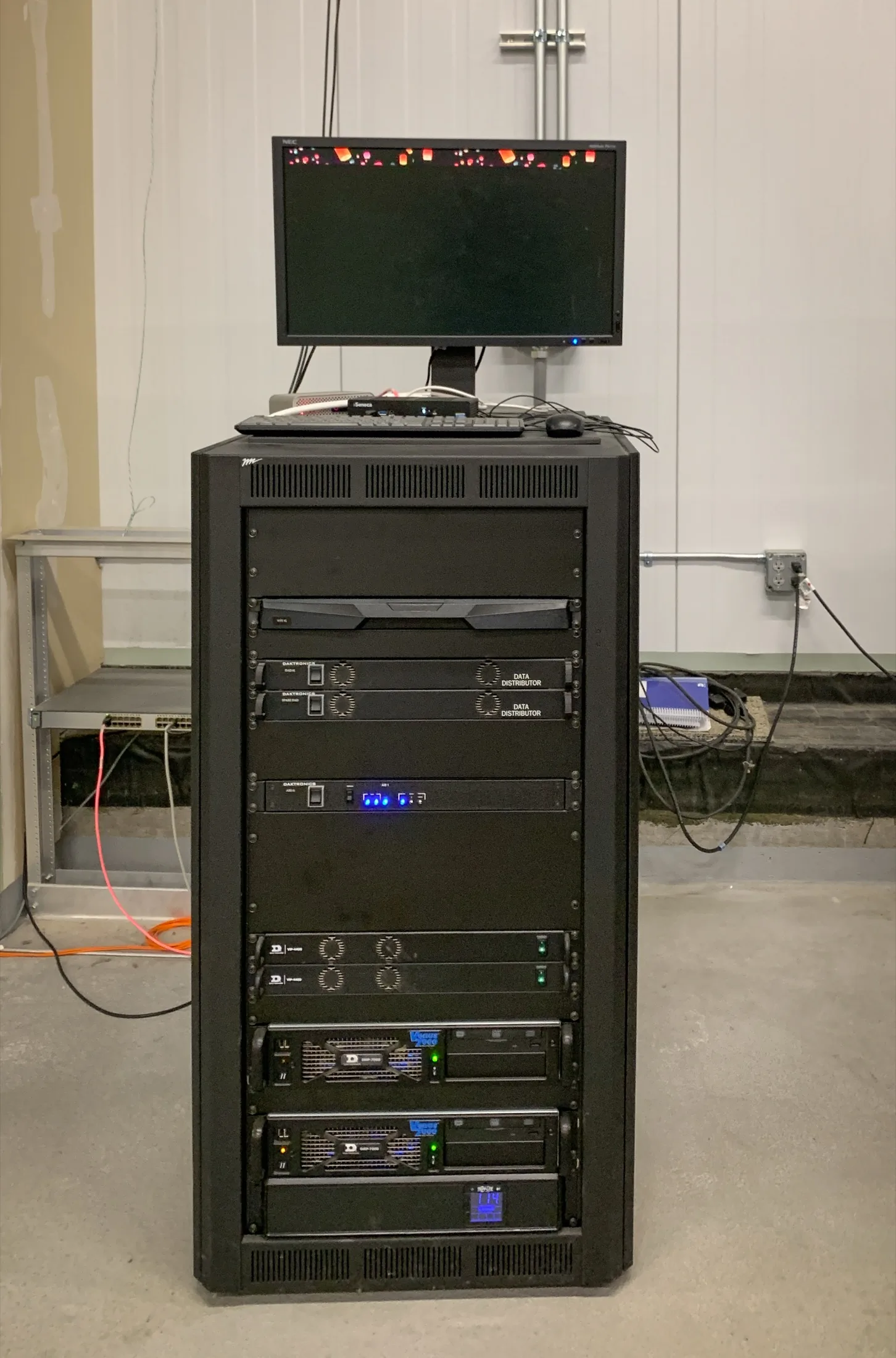
Image: Wikimedia Commons - Server Rack (CC BY-SA 4.0).
What is VMware vSphere?
VMware vSphere is an enterprise virtualization platform used to centrally manage virtual machines running on physical servers. In practice, there are two main building blocks:
- VMware ESXi: Hypervisor layer, that is, the host operating system that runs virtual machines.
- VMware vCenter Server: Central control plane that manages multiple ESXi hosts, cluster services, policies and operations.
DRS, HA, Lifecycle Manager, security controls, monitoring and alarm systems are added to this basic structure. As a result, vSphere is not just a "VM opening" tool; It is the enterprise IT operations standard.
vSphere Components: Core Architecture
1) Compute and Resource Management
The vSphere Resource Management document addresses resource management with CPU, memory, resource pool, DRS, Storage DRS and performance aspects. Technically, the important point is this: resource planning is not just a capacity calculation per host, it is a balancing model at the cluster level.
Critical decisions at this layer:
- VM placement and density plan
- CPU/memory overcommit limits
- DRS automation level
- Resource reservation for critical workloads
2) Cluster Services (vCLS, DRS, HA bond)
In the description given for vCLS in vSphere Resource Management, it is stated that the service is enabled by default to protect cluster health. The same text describes an approach to maintaining the continuity of cluster services even if vCenter is temporarily unavailable.
In the vSphere 8 Update 3 technical article published in 2024, it is stated that the resource footprint in the Embedded vCLS architecture has been reduced and the number of vCLS VMs has been reduced from 3 to 2 in some scenarios.
3) Security Layer
According to the vSphere Security document, the platform's core security topics include:
- UEFI Secure Boot
- Trusted Platform Module (TPM)
- vSphere Trust Authority
- VM Encryption
- vTPM
- Lockdown mode and role-based authorization management
Additionally, with 8.0 Update 3, TLS 1.2 and 1.3 support is highlighted in the TLS profile approach. This issue directly affects the architectural decision in regulation-oriented environments (e.g. industries with high audit requirements).
4) Monitoring and Alarm Layer
In the vSphere Monitoring and Performance document, it is stated that performance metrics are collected at frequent intervals and stored in the vCenter database, and that this data can be monitored both from graphs and from tools such as esxtop/resxtop.
Why is this component critical in production?
- Generates trend data for capacity planning
- Identifies whether the bottleneck is on the CPU, RAM, disk or network side
- Provides proactive rather than reactive operation with events/alarms
5) Lifecycle Management
The "What is vSphere Lifecycle Manager" document explains that Lifecycle Manager is a central service running within vCenter and manages host/cluster updates with an image and baseline approach.
Two technical points are important for integrity verification in the same document:
- Hash verification of downloaded content (SHA-256)
- Signature verification before remediation
This structure provides a transition from the "I applied a patch" level to the "controlled and verifiable update" level.
Reference vSphere Architecture for Ankara
The example below is the first design framework for a medium-sized institution in Ankara.
| Layer | Minimum Start Approach | Why is it important? |
|---|---|---|
| Shoo | Cluster with 3 hosts | Flexibility in maintenance and failure scenarios |
| Management | Separate vCenter management segment | Operation security and access control |
| Network | Management, vMotion, VM traffic separation | Performance and isolation |
| Storage | Tier plan + I/O monitoring | Checking app latency |
| Security | TPM + Secure Boot + role policy | Audit trail and attack surface reduction |
| Life Cycle | Lifecycle Manager image standard | Consistent patch/upgrade process |
Kısa mimari öneri:
- Clarify critical workloads and RTO/RPO targets.
- Combine cluster, network and storage design in a single document.
- Apply role-based access and encryption policy on initial installation.
- Create a regular remediation calendar with Lifecycle Manager.
- Define monitoring and alarm thresholds before going live.
2026 Current Release and Operation Notes
Why is the release plan important?
The ESXi Update and Patch Release Notes page clearly lists the chain of updates and patches released in the 8.0 pipeline. As of February 27, 2026, the 8.0 Update 3i entry can be seen in the same directory, and the page includes 24 FEB 2026 and ISO Build 25205845 information.
What does this change?
- It is necessary to plan patch windows with a regular cycle logic instead of "once a year".
- Driver/firmware compatibility and cluster standard should be constantly checked.
- For business continuity, the test environment and production migration flow should be separated.
Brief decision matrix for the operation
| Question | Quick Reply |
|---|---|
| How do I standardize ESXi patches? | With the Lifecycle Manager image approach |
| What evidence do I produce for a security audit? | Secure Boot/TPM settings, role control, patch reports |
| Why shouldn't DRS/HA be considered separately? | Resource balancing and availability have the same operational goal |
| How should vCLS resource consumption be handled? | Per cluster design should be reviewed with Update 3 changes |
Pre-Installation Technical Checklist
You can copy the following list directly into the project starter document:
- Workloads were classified according to criticality level.
- ESXi host hardware compatibility and firmware matrix verified.
- Designed vCenter access model, MFA and role structure.
- Management/vMotion/VM network segments allocated.
- DRS and HA policy objectives have been put in writing.
- vSphere Lifecycle Manager image standard created.
- Pre-patch backup/fallback plan tested.
- TPM, Secure Boot and encryption requirements verified.
- Monitoring, alarm and log storage policy has been defined.
- The first 90-day operation calendar (patch, capacity, audit) has been published.
Where to Start with Leon-X?
The safest method when starting a vSphere project in Ankara is to model the existing infrastructure and target architecture together with 2-3 weeks of technical discovery. Thus, purchasing, installation and operation steps are connected to a single road map.
Related pages:
Frequently Asked Questions
Is only the virtual machine managed with VMware vSphere?
No. vSphere; In addition to the VM life cycle, it also centralizes cluster services, resource planning, security checks, host updates, performance monitoring and alarm processes. Therefore, in corporate use, it is treated as an end-to-end operation platform, not just a hypervisor.
Can ESXi be used without vCenter?
Single host management is technically possible. However, vCenter is required for multiple hosts, DRS/HA, centralized provisioning, and lifecycle automation. As scale increases, the vCenter-less model creates operational risk.
How should the vSphere 8 update strategy be set up?
The test set first, then the non-critical production set, and finally the critical production approach is recommended. Lifecycle Manager image standard, maintenance window and return plan should be operated together. The “one-shot, mass migration” approach creates unnecessary risk in most organizations.
What are the top 3 priorities in vSphere security?
- Powerful access and role management
- Host chain of trust (TPM, Secure Boot, signature verification)
- Regular patch/upgrade cycle and provable record
Conclusion
VMware vSphere is not just a virtualization tool for institutions in Ankara; It is an infrastructure standard that manages performance, continuity and security together. Doğru mimari; It combines ESXi, vCenter, cluster services, security and lifecycle management in a single design. Successful vSphere projects in the 2026 period make a difference with their operational discipline rather than installation speed.
For vSphere discovery and architectural planning specific to your organization, you can contact.
Resources
- Broadcom TechDocs - vSphere Resource Management (vSphere 8.0)
- Broadcom TechDocs - vSphere Security (vSphere 8.0)
- Broadcom TechDocs - vSphere Monitoring and Performance (vSphere 8.0)
- Broadcom TechDocs - What is vSphere Lifecycle Manager
- Broadcom TechDocs - ESXi Update and Patch Release Notes
- Broadcom TechDocs - VMware ESXi 8.0 Update 3i Release Notes
- VMware Cloud Foundation Blog - What's New in VMware vSphere 8 Update 3?
- Wikimedia Commons - Server Rack (image source, CC BY-SA 4.0)