VMware enterprise virtualization architecture is not just about installing a few ESXi hosts and running virtual machines. The real issue is creating a sustainable enterprise platform by designing compute, networking, storage, management, and operations together. The short answer is this: in the March 17, 2025 context, a strong VMware enterprise virtualization architecture requires host standardization, clear cluster boundaries, deliberate network and storage design, resilient management components, and operating processes that scale. This guide is written for teams that want to position virtualization as an enterprise platform, not only a technical deployment.
This article is especially for:
- VMware administrators
- infrastructure architects
- IT managers building enterprise-scale virtualization
- organizations redesigning a growing VMware platform
Quick Summary
- Enterprise virtualization architecture is not only about the hypervisor layer.
- Compute, network, storage, and management should be designed together.
- Standardized hosts and cluster structure support operational scalability.
- Monitoring, access, and management components are core design elements, not afterthoughts.
- Update, capacity, and availability processes should be planned from the start.
- That is why enterprise virtualization architecture is a platform model, not just a technology list.
Table of Contents
- What Does Enterprise Virtualization Architecture Include?
- How Should the Compute Layer Be Designed?
- How Should Networking and Storage Be Positioned?
- Why Is the Management Layer Its Own Design Topic?
- How Is Operational Scalability Achieved?
- A Practical 20-Minute Architecture Checklist
- Frequently Asked Questions
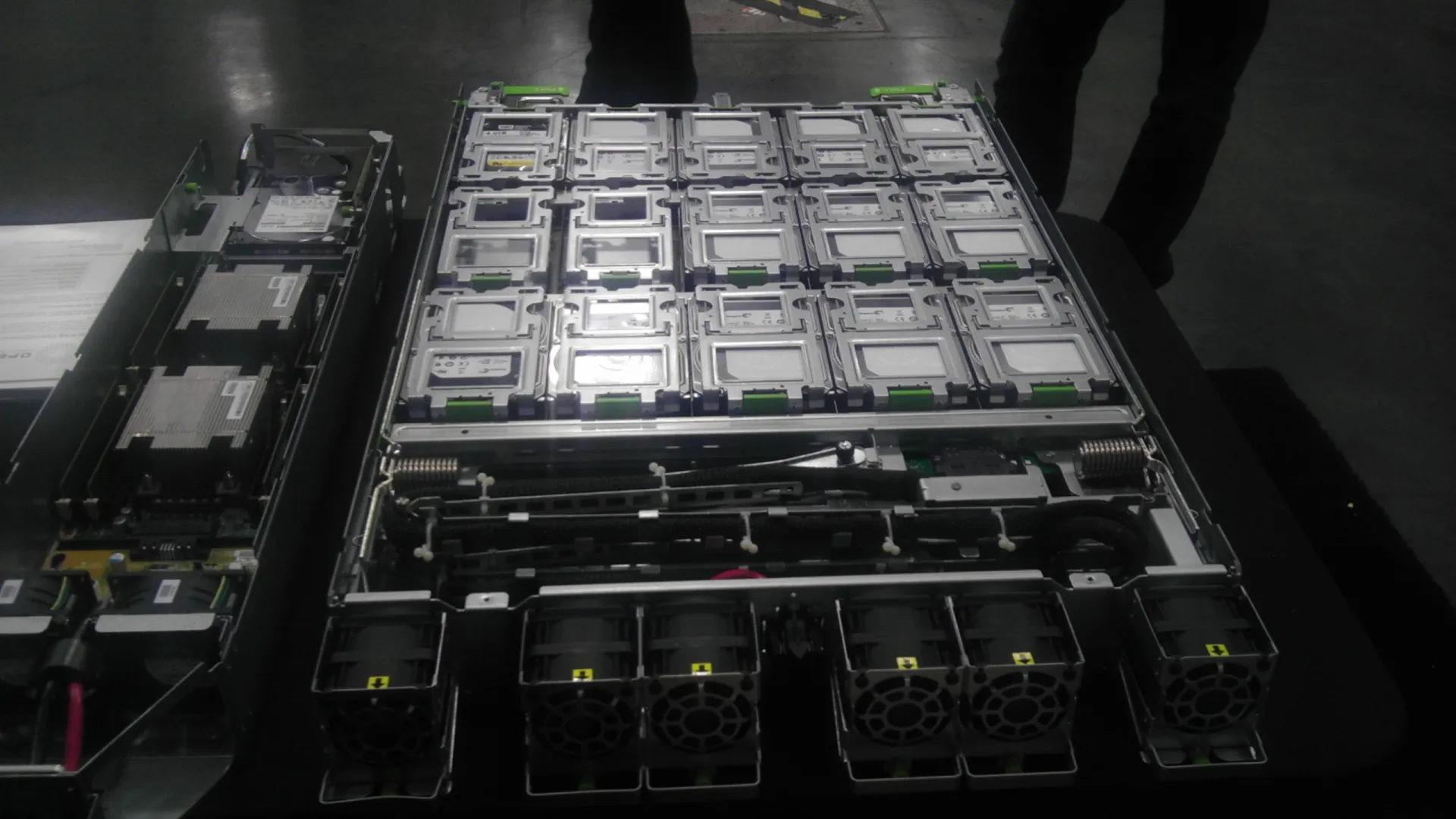
Image: Wikimedia Commons - Open Compute 1U Drive Tray Flat.
What Does Enterprise Virtualization Architecture Include?
Enterprise virtualization architecture is more than a virtual machine hosting layer. In practice, it is a platform model made of:
- compute
- networking
- storage
- management
- automation and operations
Each of these layers affects the others directly. Strong compute design alone is not enough if storage standards, network segmentation, or management visibility are weak. In enterprise environments, the goal is predictable behavior across the entire platform.
How Should the Compute Layer Be Designed?
At enterprise scale, the compute layer should be designed around standardization and fault tolerance, not only around host count. Mixed hardware generations and inconsistent capacity profiles may look flexible in the short term but usually create operational complexity later.
A healthier compute design usually includes:
- similar host profiles
- sensible cluster boundaries
- a scale-out model for growth
- capacity headroom for maintenance and failures
The more standardized the compute layer becomes, the simpler the rest of the platform usually is to run.
How Should Networking and Storage Be Positioned?
In enterprise virtualization, networking and storage often determine the real bottlenecks. Management, vMotion, storage, and production traffic should be planned deliberately rather than assumed to coexist cleanly.
The same applies to storage:
- is datastore visibility consistent across hosts
- does the performance tier match workload requirements
- does network design affect storage behavior
These layers may belong to different teams, but they still need one architectural model.
Why Is the Management Layer Its Own Design Topic?
At enterprise scale, a virtualization platform is valuable not only when it runs, but when it can be governed. That is why vCenter, access model, monitoring, alerting, inventory, logging, and update processes should be treated as foundational architecture, not later additions.
The management layer is shaped by:
- management component availability
- roles and permissions model
- monitoring and alert coverage
- patching and upgrade approach
- inventory visibility
If this layer is weak, the platform may be technically powerful but operationally fragile.
How Is Operational Scalability Achieved?
Enterprise architecture is measured not only by the first deployment, but by how well it behaves as it grows. Operational scalability depends on principles such as:
- standardized host and cluster patterns
- simple naming and segmentation rules
- repeatable automation and maintenance flows
- capacity and performance visibility
- an operating model aligned with change processes
One of the most common mistakes is assuming the first successful rollout proves the architecture. In reality, enterprise architecture is only proven when growth does not destroy manageability.
A Practical 20-Minute Architecture Checklist
To assess an existing virtualization architecture quickly:
- Check how standardized the host profiles are.
- Review whether cluster boundaries match workload and operational logic.
- Examine network segmentation and storage access model.
- Validate monitoring, permissions, and update design in the management layer.
- Confirm that platform growth expectations are defined.
- Review how the platform behaved during the most recent major maintenance or fault event.
Even this short assessment can reveal whether the platform behaves like an enterprise architecture or just a collection of hosts.
Related Content
- VMware Cluster Design Guide
- VMware High Availability Architecture
- VMware Storage Architecture Best Practices
Next Step with Leon-X
When enterprise virtualization architecture is designed well, organizations operate not only virtual machines but a scalable, visible, and sustainable platform. Leon-X helps teams design stronger VMware platforms by aligning compute, network, storage, management, and operational layers together.
Related pages:
Frequently Asked Questions
What should come to mind first in VMware enterprise virtualization architecture?
That it is not only about the hypervisor, but about a full platform architecture.
What is the most important principle in the compute layer?
Standardization combined with fault tolerance.
Why is the management layer so important?
Because platform sustainability in enterprise environments depends on access, monitoring, and update quality.
Why are network and storage so decisive?
Because real performance and operational stability are often determined there, not only in compute.
How should enterprise architecture success be measured?
Not by first deployment alone, but by how manageable the platform remains during growth and failure.
Conclusion
VMware enterprise virtualization architecture is not only about running virtual machines. In the March 17, 2025 context, the stronger approach is designing compute, network, storage, management, and operational layers together as one sustainable enterprise platform.