A VMware VM stuck at powering on issue means the power-on request has started but cannot complete and the process becomes stuck. The short answer is this: in the May 19, 2025 context, the safest way to resolve it is to determine whether the task itself is stuck or whether the real problem sits in the host, datastore, lock state, or concurrent operation layer. This guide is written for teams that want a safer order for analyzing VMs that hang during power-on.
This guide is especially for:
- VMware administrators
- operations and support teams
- systems and infrastructure specialists
- IT teams dealing with VMs hanging during startup
Quick Summary
Stuck at Powering Onis not the same asNot Powering On.- First separate a stuck task from a broader infrastructure problem.
- Host, datastore, file-lock, and concurrent-task issues are common causes.
- Blind force-off or unregister actions can increase risk.
- Even after recovery, the reason for the stall should be documented.
- That is why the right approach is to inspect both task and infrastructure surfaces together.
Table of Contents
- What Does VM Stuck at Powering On Actually Mean?
- What Should Be Checked in the First 10 Minutes?
- What Are the Most Common Causes?
- Which Interventions Are Safer and Which Are Risky?
- How Do You Prevent It from Repeating?
- Quick Response Checklist
- Frequently Asked Questions
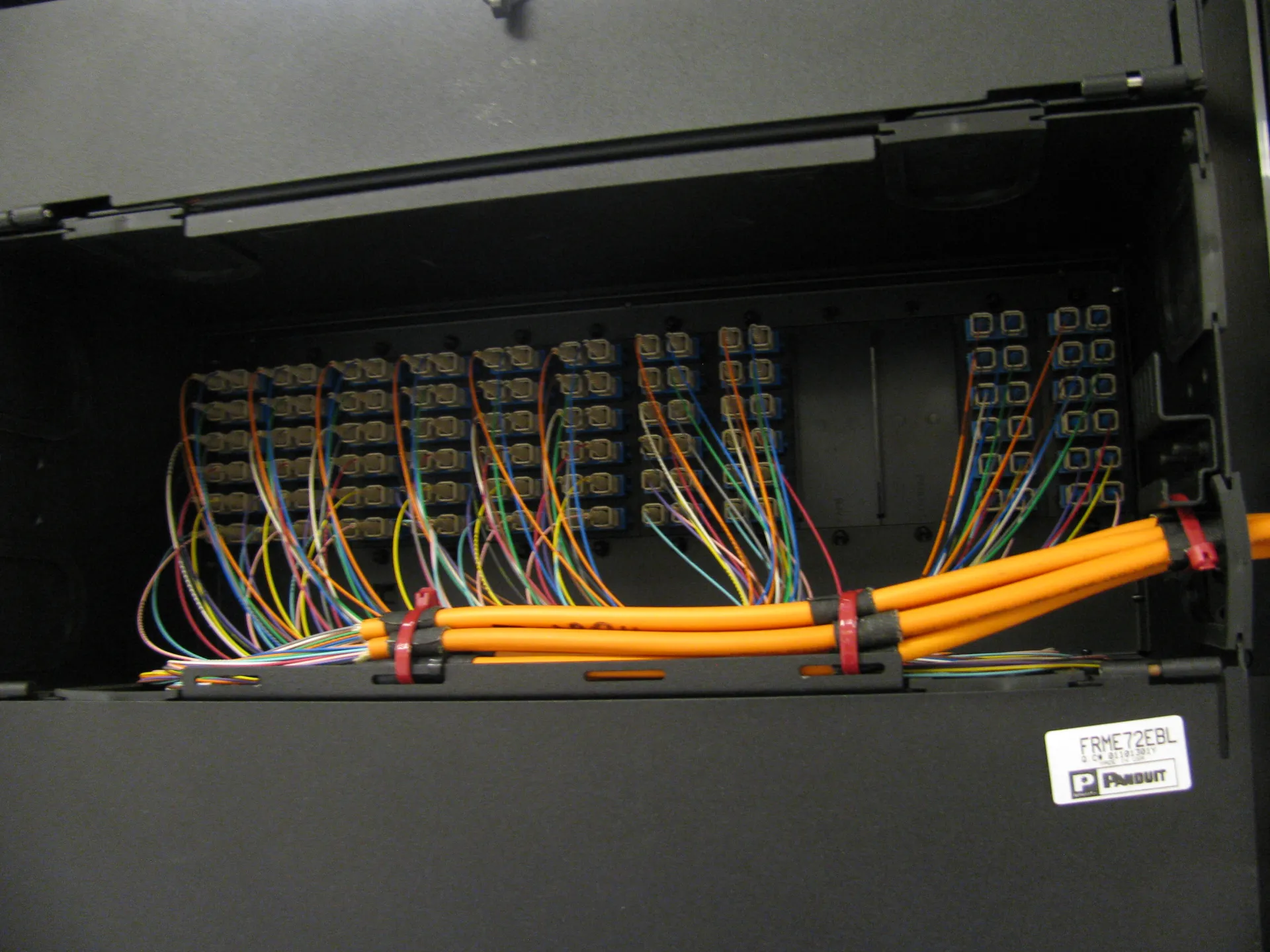
Image: Wikimedia Commons - Network Fiber Patch Rear 1.
What Does VM Stuck at Powering On Actually Mean?
This state means the power-on task was started but could not complete successfully. In practice, the problem is usually related to one of these surfaces:
- a stuck task or blocked vCenter operation
- a host-side execution process that is not progressing
- datastore or VM file lock state
- concurrent backup, snapshot, or replication activity
- resource or placement instability
The key distinction is whether the task record is stuck or the VM startup itself is blocked by the infrastructure beneath it.
What Should Be Checked in the First 10 Minutes?
The early goal is to determine whether the issue is a stuck task or a real infrastructure problem below it. A safer first sequence is:
- Capture the full task or error message.
- Check how other VMs on the same host and datastore behave.
- Review concurrent tasks in vCenter for stuck or overlapping operations.
- Inspect recent snapshot, backup, move, or replication history for the VM.
- Verify host, datastore, and cluster alarm correlation.
This separation reduces the risk of performing the wrong task cleanup or touching files unnecessarily.
What Are the Most Common Causes?
The most common causes behind VM stuck at powering on are:
- stale file lock
- stuck task on the host
- datastore delay or access problem
- concurrent backup, snapshot, or replication operation
- vCenter task-layer inconsistency
- host communication or resource pressure
This issue appears more often after recent storage or operational activity around the VM.
Which Interventions Are Safer and Which Are Risky?
A safer approach is:
- documenting the task state and message
- verifying lock, datastore, and host health
- checking for concurrent operations
- reviewing recent VM activity history
A riskier approach is:
- force-clearing tasks before understanding why they stalled
- manually moving or deleting files
- intervening while backup or replication is still active
- applying several recovery methods at the same time
The goal is to restore the VM without creating a new integrity problem.
How Do You Prevent It from Repeating?
Permanent improvement usually requires reviewing:
- datastore performance and visibility
- snapshot and backup discipline
- task and alarm visibility
- lock handling and operation order
- host and cluster health surface
- maintenance and change records
Repeated power-on stalls usually point to weak operational sequencing or poor infrastructure visibility.
Quick Response Checklist
- Record the task and error message.
- Check other VMs on the same host and datastore.
- Review concurrent backup, snapshot, or move activity.
- Verify lock state and datastore access.
- Review host and cluster alarm correlation.
- Document root cause and improve the triggering workflow.
Related Content
Next Step with Leon-X
In stuck-at-powering-on incidents, the goal is not only to clear the task but to understand what left it blocked. Leon-X helps teams build more resilient VMware operations by reviewing datastore behavior, lock patterns, task visibility, and operational records together.
Related pages:
Frequently Asked Questions
What does VM stuck at powering on mean?
It means the power-on task started but could not complete and remained stuck.
What should be checked first?
The task message, datastore state, and concurrent operations should be checked together.
Should a force task cleanup be done immediately?
No. First determine why the task is stuck and whether lock or infrastructure issues exist underneath it.
What is the most common cause?
Locks, datastore access issues, and recent snapshot or backup operations are common causes.
How do I reduce repeat risk?
Manage task visibility, backup discipline, datastore health, and operational sequencing more deliberately.
Conclusion
A VMware VM stuck at powering on problem is often not just a VM issue, but a signal of a wider task, lock, datastore, or host problem underneath it. In the May 19, 2025 context, the strongest response is to isolate the stuck layer first, avoid risky interventions, and close the incident at root-cause level.