The difference between Law No. 5651 and KVKK is clearer than many teams assume: Law No. 5651 focuses on internet publications, traffic data, access-blocking processes, and role-based obligations for specific internet actors, while KVKK establishes the broader framework for processing and protecting personal data. The short answer is this: Law No. 5651 addresses “which internet actor is responsible for which record and process,” while KVKK addresses “under what conditions personal data may be processed, protected, and retained.” This guide is written for teams that need to separate those two frameworks operationally instead of mixing them together.
This guide is especially useful for:
- IT managers who need to interpret Law No. 5651 and KVKK together
- security teams working on logs, SIEM, and access records
- managers building coordination between legal, compliance, and information security
- organizations running guest Wi-Fi, hotspot, hosting, or centralized logging projects
Quick Summary
- Law No. 5651, adopted on
4/5/2007, regulates the obligations of content providers, hosting providers, access providers, and collective-use providers. - Under Law No. 5651,
traffic dataincludes IP address, port information, service start and end time, service type, data volume, and subscriber identity information where available. - Hosting providers are required to retain relevant traffic data between
1 yearand2 years; access providers between6 monthsand2 years. - The aim of KVKK is to protect fundamental rights and freedoms, especially privacy, and to regulate the obligations of those processing personal data.
- Under KVKK, data processing is limited by legality, purpose limitation, proportionality, and retention only for the required or legally mandated period.
- In practice, many Law No. 5651 logs also contain personal data. That means a log retained for Law No. 5651 purposes can also become a data set that must be protected under KVKK.
- This article provides an operational and managerial overview, not a legal opinion for a specific case.
Table of Contents
- What Does Law No. 5651 Regulate?
- What Does KVKK Regulate?
- Why Are Law No. 5651 and KVKK Often Confused?
- Comparison Table: Law No. 5651 vs KVKK
- How Should Logging and Retention Be Read Together?
- What Mistakes Do Organizations Make Most Often?
- Related Content
- Checklist
- Next Step with Leon-X
- Frequently Asked Questions
- Sources

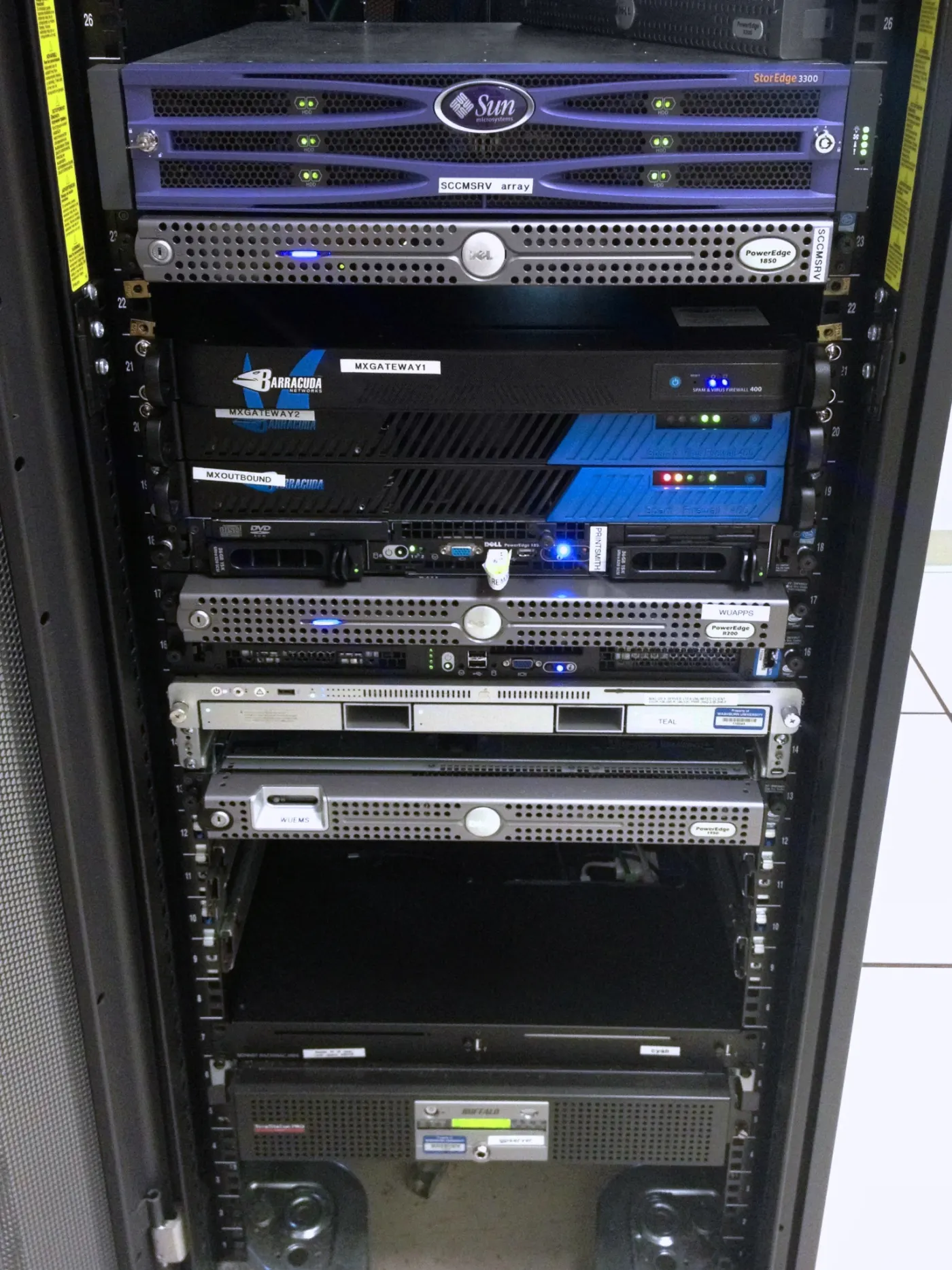
Image: Wikimedia Commons - A view of the server room at The National Archives.
What Does Law No. 5651 Regulate?
The purpose and scope article of Law No. 5651 is explicit: it regulates the procedures for fighting certain crimes committed through internet publications and defines the obligations of content providers, hosting providers, access providers, and collective-use providers. In other words, Law No. 5651 is not a general data-protection law that applies identically to every organization. The first question is always which role the organization actually has.
That is why a Law No. 5651 assessment should start with these questions:
- are you a content provider?
- are you a hosting provider?
- are you an access provider?
- are you a commercial collective-use provider?
The traffic data definition in Article 2 is also specific. It includes IP address, port information, service start and end time, service type, data volume, and subscriber identity information where applicable. That matters because Law No. 5651 is not a blanket “store everything” rule. It creates retention obligations for certain internet-traffic and publication-chain records.
Operationally, two of the most visible consequences of Law No. 5651 are:
- keeping traffic data for defined periods
- implementing content-removal or access-blocking decisions
The official FAQ page of the Access Providers Association also states that, under Article 6/A, ESB coordinates the implementation of content-removal and access-blocking decisions outside the scope of Articles 8 and 8/A.
What Does KVKK Regulate?
The KVKK framework is broader. As the authority’s official materials state, the purpose of the law is to protect the fundamental rights and freedoms of natural persons whose personal data are processed, especially the right to privacy, and to regulate the obligations of real and legal persons processing personal data.
In scope terms, KVKK applies to:
- natural persons whose personal data are processed
- parties processing such data fully or partially by automated means
- parties processing data non-automatically where the data form part of a filing system
That means KVKK is not limited to internet traffic. HR records, customer data, CCTV footage, access records, support requests, and log files can all fall within its operational reach.
What makes KVKK especially important in practice is its set of core principles:
- lawful and fair processing
- accurate and up-to-date data where necessary
- processing for specific, explicit, and legitimate purposes
- relevance, limitation, and proportionality to purpose
- retention only for the legally required period or the period necessary for the processing purpose
The authority’s official page on obligations regarding data security and the Personal Data Security Guide also make clear that data controllers are expected to implement technical and administrative safeguards, perform audits, and treat logs as part of the broader security-control surface.
Why Are Law No. 5651 and KVKK Often Confused?
The main reason is logs. When teams hear Law No. 5651, they tend to think about log retention. When they hear KVKK, they think about data protection. But many logs can contain both traffic-data elements and personal-data elements.
For example:
- an organization offering guest Wi-Fi or internet access may have Law No. 5651-related logging obligations
- if the same record includes IP data, timestamps, or user information, it may also involve personal data under KVKK
The key result is this: Law No. 5651 may require certain records to be kept, but KVKK governs how those records are protected, who may access them, for what purpose they are used, and what happens after the mandatory retention basis ends.
That is why “we bought a Law No. 5651 logging appliance, so KVKK is covered” is weak. The reverse is also weak: publishing privacy notices or building a data inventory does not automatically solve Law No. 5651 questions around traffic data and publication-chain responsibility.
Comparison Table: Law No. 5651 vs KVKK
| Topic | Law No. 5651 | KVKK |
|---|---|---|
| Main purpose | Internet publications, certain crimes, and obligations of internet actors | Protection of fundamental rights in personal-data processing |
| Scope logic | Role-based: content, hosting, access, collective use | Personal-data processing by real and legal persons |
| Core data focus | Traffic data and publication-chain records | Personal data and all related processing activities |
| Retention approach | Statutory traffic-data periods under the law and regulation | Purpose-limited, proportionate, and necessary retention |
| Security expectation | Accuracy, integrity, confidentiality, and decision implementation | Technical and administrative measures, access control, audit, minimization |
| Main question | “Which internet role do I have and what must I retain?” | “On what basis is this data processed and how is it protected?” |
How Should Logging and Retention Be Read Together?
The text of Law No. 5651 sets a 1 year to 2 years retention frame for hosting providers and a 6 months to 2 years frame for access providers. The practical meaning is straightforward: if your organization falls into a relevant role under Law No. 5651, failing to retain the required records or keeping them for arbitrarily short periods creates a separate risk.
But if the same records contain personal data, KVKK introduces additional questions:
- who has access to them?
- are they stored with integrity and protection controls?
- can everyone see all logs?
- is purpose limitation enforced?
- when the legal basis ends, is there a deletion or anonymization path?
That is why the right model is not to force Law No. 5651 and KVKK into conflict, but to layer them. First identify the role and logging obligation under Law No. 5651. Then bring those records into the personal-data governance discipline required by KVKK.
This is where Business Management Services, especially Cybersecurity Assessment Service, can help align legal interpretation with control design. For centralized collection and correlation, Hardware & Software Services and SIEM and Security Event Management Integration complete the implementation side of the same chain.
What Mistakes Do Organizations Make Most Often?
Assuming Law No. 5651 applies identically to every company
Law No. 5651 is role-based. Not every company is automatically a hosting provider or access provider.
Reducing KVKK to notice text only
KVKK is not only a documentation matter. It affects log security, access control, audit, retention, and deletion practices as well.
Keeping logs without protecting them
Even if Law No. 5651 drives record creation, KVKK still requires confidentiality and integrity around those same records where personal data are involved.
Treating indefinite retention as the safest option
“Keep it forever just in case” is hard to defend under KVKK’s proportionality and retention principles. Legal retention and endless archiving are not the same thing.
Letting technical and legal teams work separately
This is where most Law No. 5651 and KVKK gaps appear. Legal teams define what must be kept, IT defines how it is kept, and security defines how it is protected. Those decisions need to be aligned.
Related Content
- How to Implement VMware Logging for KVKK
- Dell Server Logging Requirements for KVKK
- VMware KVKK Technical Measures Guide
- How to Build Storage Disaster Recovery for KVKK
Checklist
- the organization’s role under Law No. 5651 was identified
- relevant traffic-data or record categories under Law No. 5651 were listed
- the personal-data dimension of those same records was assessed under KVKK
- access, masking, retention, and deletion permissions were separated
- log integrity and time synchronization were verified
- legal retention and operational archive periods were separated
- audit and incident-review procedures were documented
Next Step with Leon-X
Understanding the difference between Law No. 5651 and KVKK is not about memorizing article numbers. It is about managing why a record is kept, whether it carries personal-data risk, and how the same record should be protected operationally. Leon-X helps make those gaps visible through Business Management Services, especially Cybersecurity Assessment Service. On the technical side, Hardware & Software Services and SIEM and Security Event Management Integration help make log management more auditable and operationally stronger. To review your current setup or request a proposal, continue through the Contact page.
Relevant pages:
- Business Management Services
- Cybersecurity Assessment Service
- SIEM and Security Event Management Integration
- Contact
Frequently Asked Questions
Are Law No. 5651 and KVKK the same thing?
No. Law No. 5651 focuses on internet publications and certain internet-actor obligations, while KVKK focuses on personal-data processing and protection.
Can Law No. 5651 logs also count as personal data?
Yes. If they include IP data, timestamps, usernames, or subscriber information, they often create a personal-data dimension as well.
Does every company have to keep traffic logs under Law No. 5651?
No. The answer depends on the organization’s role under Law No. 5651. Generalizing without role analysis is weak.
Does KVKK require deletion of records that are mandatory under Law No. 5651?
KVKK requires retention for the legally mandated period or the period necessary for the processing purpose. If there is a specific statutory retention obligation, the analysis must be made together with that obligation.
Is buying a Law No. 5651-compatible logging appliance enough?
No. Access rights, integrity controls, encryption, auditing, alerting, and disposal processes still need to be designed.
Conclusion
The difference between Law No. 5651 and KVKK is that one focuses on internet publication roles and traffic-chain obligations, while the other focuses on personal-data processing and protection. The stronger operational model is to read Law No. 5651 as a role-and-record obligation layer and KVKK as the personal-data and governance layer for those same records. That allows organizations to understand both what they must retain and how they must manage the data they retain.
Sources
- Law No. 5651 - mevzuat.gov.tr PDF
- Access Providers Association - Legislation
- Access Providers Association - Frequently Asked Questions
- KVKK - Purpose and Scope of Law No. 6698
- KVKK - Obligations Regarding Data Security
- KVKK - Personal Data Security Guide (Technical and Administrative Measures)
- KVKK - Personal Data Protection Law and Its Application PDF
- Wikimedia Commons - A view of the server room at The National Archives