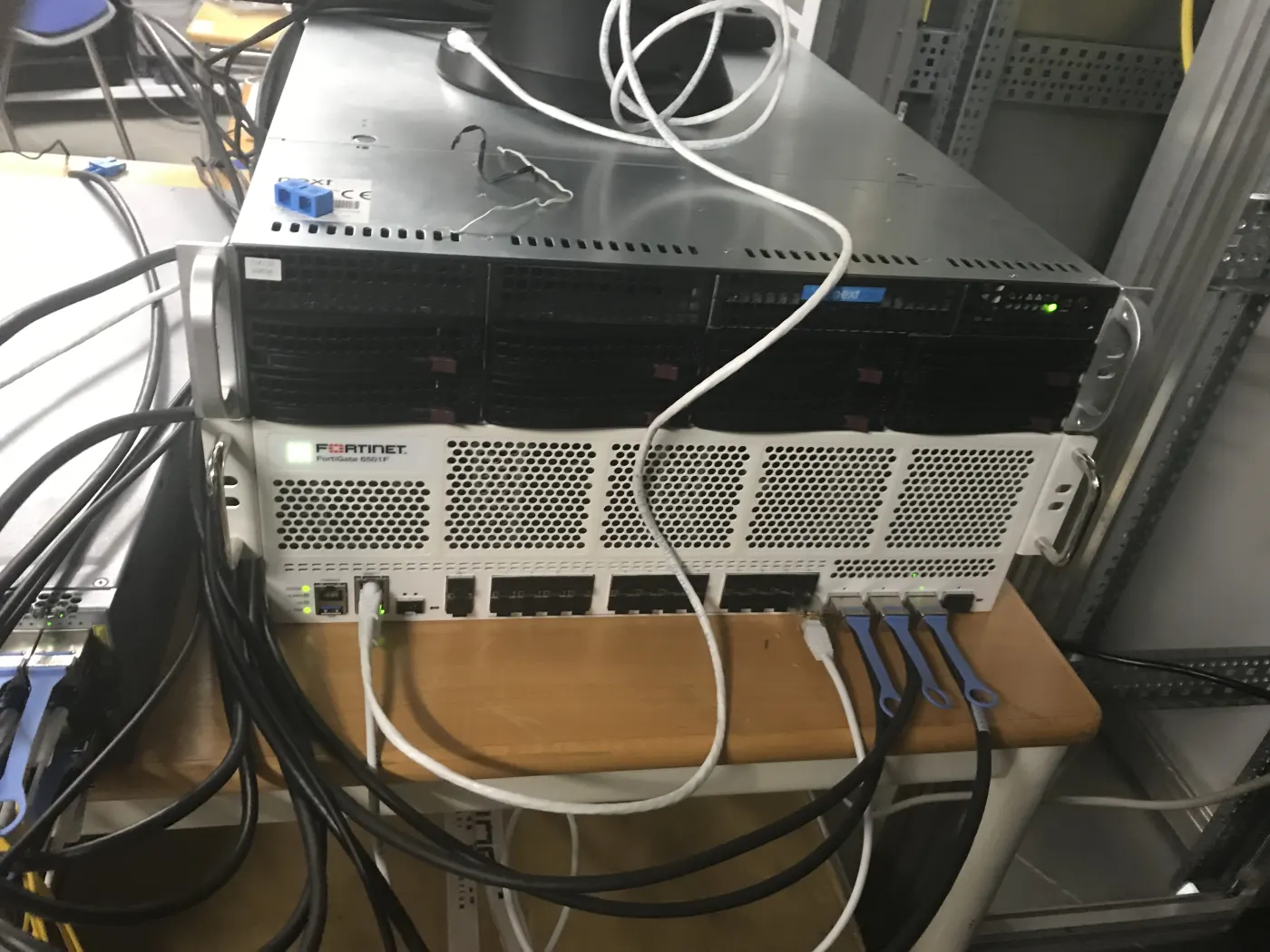
In the March 28, 2026 context, FortiGate SSL Inspection is one of the most important controls for closing the visibility gap created by encrypted HTTPS and other SSL/TLS traffic. The short answer is this: when planned correctly, FortiGate SSL Inspection gives you basic visibility with certificate inspection and real content-level security with deep inspection, but if CA distribution, bypass policy, user privacy, and performance capacity are not designed together, production problems appear quickly. This guide is written for teams that are deploying SSL inspection for the first time or trying to mature an existing FortiGate design.
This guide is especially for:
- network and security teams
- FortiGate administrators
- SOC and operations teams
- IT leaders who want to standardize SSL inspection safely
Quick Summary
- FortiGate SSL inspection has two main approaches: certificate inspection and deep inspection.
- Certificate inspection only inspects headers up to the SSL/TLS layer and does not decrypt the full payload.
- Deep inspection decrypts, inspects, and then re-encrypts the traffic.
- Deep inspection requires a CA design that client devices trust.
- Fortinet documentation explicitly recommends using an organizational CA and defining clear exemptions for finance, health, and privacy-sensitive traffic.
- Non-standard HTTPS ports and the flow-based vs proxy-based distinction are often missed.
- The right approach is not “decrypt everything.” It is to build risk-based coverage, bypass logic, and logging together.
Table of Contents
- What Does FortiGate SSL Inspection Actually Do?
- What Is the Difference Between Certificate Inspection and Deep Inspection?
- What Prerequisites Are Required for Deep Inspection?
- Which Traffic Should Be Exempted?
- What Design Mistakes Are Most Common?
- Initial Implementation Checklist
- Frequently Asked Questions
Image: Wikimedia Commons - Rack001.
What Does FortiGate SSL Inspection Actually Do?
Because a large share of modern threats moves through encrypted sessions, port-based and IP-based filtering alone is not enough. Fortinet documentation positions SSL/TLS inspection as the control layer that prevents encrypted traffic from bypassing normal security defenses.
In practice, SSL inspection matters for:
- detecting threats hidden in HTTPS
- improving application-control visibility
- making URL filtering more accurate
- enforcing policy on encrypted traffic
- classifying outbound user traffic more reliably
The real design decision is how deeply the firewall should inspect that traffic.
What Is the Difference Between Certificate Inspection and Deep Inspection?
Fortinet's official documentation draws a very clear line between the two.
Certificate inspection
With certificate inspection, FortiGate only inspects information up to the SSL/TLS layer. That means you get visibility into:
- certificate metadata
- SNI and session context
- some web-access and category-control scenarios
but the actual content is not decrypted.
This model makes sense when:
- you do not want full decryption for privacy reasons
- basic encrypted web control is enough
- client-side CA deployment is not ready yet
Fortinet also notes that the built-in certificate-inspection profile listens on port 443 by default. If applications use non-standard HTTPS ports such as 8443, the profile must be cloned and extended or configured to inspect all ports where appropriate.
Deep inspection
Deep inspection means FortiGate impersonates the destination server, decrypts the traffic, inspects the content, and re-encrypts the session. This enables stronger controls for:
- HTTPS threat detection
- application signatures
- more accurate URL and category visibility
- content-aware security enforcement
But the trade-off is real:
- trusted CA distribution becomes mandatory
- CPU and session impact rises
- bypass design becomes more important
- user experience and privacy must be managed carefully
What Prerequisites Are Required for Deep Inspection?
1. A trusted CA model
Fortinet best-practice and administration documents state that for seamless deep inspection, users must trust the certificate chain used by the FortiGate. Otherwise, browser or application certificate warnings will appear continuously.
The healthiest model is:
- use an organizationally trusted CA
- distribute that CA centrally through GPO, MDM, or equivalent tooling
- separate pilot and production rollout stages
Fortinet also explicitly warns not to import Fortinet_CA_Untrusted as a trusted root on endpoints.
2. Understand whether you are using proxy-based or flow-based inspection
Fortinet documentation includes an important note: in flow-based inspection mode, certificate inspection does not perform some certificate-validation and SNI checks. If those controls are required, proxy-based inspection should be considered.
This matters especially in:
- stricter certificate-validation environments
- sensitive access-policy designs
- organizations that need more defensible control behavior
3. Capacity planning before rollout
Because deep inspection opens and re-wraps TLS sessions, it directly affects CPU behavior and session handling. Before rollout, teams should review:
- user count
- concurrent HTTPS volume
- the combination of active security profiles
- appliance sizing and SSL offload behavior
SSL inspection should be treated as a capacity-planned security service, not as a casual checkbox.
Related content:
- Cybersecurity Consulting: 2026 Checklist for SMBs
- How to Configure VLANs in VMware
- How Does VMware Network Architecture Work?
Which Traffic Should Be Exempted?
Fortinet documentation explicitly addresses privacy and compliance-sensitive exemption design when deep inspection is applied. Finance and banking, health and wellness, and personal privacy categories are commonly treated as exceptions in example guidance.
This means:
- not every HTTPS session should be decrypted at the same level
- user privacy must be balanced against threat visibility
- HR, health, banking, and personal-use policies should be handled deliberately
The strongest design is a written bypass policy approved jointly by security and compliance or legal stakeholders.
What Design Mistakes Are Most Common?
Forcing everything through deep inspection
This improves visibility in the short term, but often creates certificate errors, broken applications, and user complaints.
Using weak or scattered certificate distribution
A manual, poorly tracked CA rollout becomes unmanageable very quickly.
Ignoring the proxy vs flow distinction
This creates a silent gap between expected and actual control behavior.
Forgetting non-standard HTTPS ports
Assuming only port 443 matters leaves visibility gaps in applications using ports such as 8443.
Treating exemptions as ad hoc decisions
If privacy-sensitive, regulated, or application-specific exceptions are not documented, governance weakens fast.
Initial Implementation Checklist
- The team decided clearly whether certificate inspection or deep inspection is needed.
- A CA model and endpoint distribution plan were prepared.
- Proxy-based versus flow-based behavior was validated.
- Non-standard HTTPS port coverage was reviewed.
- A written bypass list was approved by security and compliance stakeholders.
- A pilot user group completed certificate and application compatibility testing.
- CPU, session behavior, and log visibility were measured.
- Production rollout was planned in phases.
Next Step with Leon-X
FortiGate SSL Inspection should be handled as more than device configuration. It requires governance, certificate lifecycle management, and careful user-impact planning. Leon-X helps teams turn SSL inspection into a controlled production capability with staged rollout, defensible bypass logic, and observable policy behavior.
Related pages:
- Business Management Services
- Network Security Policy Management
- Hardware and Software Solutions
- Router, Switch and Firewall Deployment Service
- Contact
Frequently Asked Questions
Is FortiGate SSL Inspection the same as certificate inspection?
No. Certificate inspection only looks up to the SSL/TLS header layer. Deep inspection decrypts the content and inspects it more deeply.
Do client devices need a certificate for deep inspection?
Yes. To avoid trust warnings and broken user experience, clients must trust the CA chain used by the FortiGate for inspection.
Should every user session go through deep inspection?
No. Privacy, regulatory constraints, and application compatibility require a deliberate exemption model.
Does proxy-based versus flow-based mode make a difference?
Yes. Fortinet documentation shows that some certificate-validation and SNI-related behaviors depend on the inspection mode.
What is the safest rollout pattern?
Start with a pilot group, distribute certificates centrally, measure CPU and session behavior, then expand in phases.
Conclusion
FortiGate SSL Inspection is one of the strongest ways to restore visibility into encrypted traffic, but success does not come from simply enabling deep inspection. In the March 28, 2026 context, the best model is to understand the difference between certificate inspection and deep inspection, solve CA distribution centrally, define a written exemption policy, and manage rollout with measurable performance and user-impact checks.
Sources
- Fortinet Document Library - SSL/TLS deep inspection (FortiGate / FortiOS 7.4.0 Best Practices)
- Fortinet Document Library - Deep inspection (FortiGate / FortiOS 7.0.2 Administration Guide)
- Fortinet Document Library - Certificate inspection (FortiGate / FortiOS 7.0.13 Administration Guide)
- Fortinet Document Library - Deep packet inspection (FortiGate / FortiOS 7.4.4 NGFW ATP Deployment Guide)
- Fortinet Document Library - Preventing certificate warnings (FortiGate / FortiOS Cookbook)
- Wikimedia Commons - Rack001