Fortinet Firewall, Palo Alto Networks NGFW, and Cisco Secure Firewall solve the same security problem with different priorities: controlling traffic by application, user, encrypted-flow visibility, threat intelligence, and centralized policy management rather than only by port and IP address. The short answer is this: Fortinet is often strong for network-security convergence, SD-WAN, and price/performance; Palo Alto Networks is strong for application identity, advanced policy design, and mature enterprise security operations; Cisco becomes especially valuable when the organization already runs a Cisco network and security ecosystem.
This guide is written for:
- IT leaders planning a new firewall investment
- network teams shortlisting FortiGate, Palo Alto, or Cisco
- organizations designing branch, campus, data center, and remote access security together
- buyers who want to evaluate operational cost, not only appliance price
Quick Summary
- Fortinet documentation positions FortiGate NGFW around automated visibility into applications, users, and networks, supported by FortiGuard security services.
- Palo Alto Networks NGFW documentation highlights App-ID as the mechanism for identifying applications regardless of port, protocol, or encryption status.
- Cisco Secure Firewall FMC access control policies manage intrusion, file, and malware inspection as part of the access-control flow.
- Fortinet is often a strong fit for SD-WAN, distributed branches, and a unified operating model.
- Palo Alto Networks is often a strong fit when application identity, decryption policy, and advanced security management are central requirements.
- Cisco is often a strong fit when Cisco switching/routing, ISE, Secure Client, Talos, and Snort are already part of the operating model.
- The right choice is not a brand ranking. It is a scoring exercise across throughput, SSL inspection, licensing, team maturity, and integration needs.
Table of Contents
- Which Criteria Should Drive the Comparison?
- When Does Fortinet Firewall Make More Sense?
- When Does Palo Alto Networks Make More Sense?
- When Does Cisco Secure Firewall Make More Sense?
- Short Comparison Table
- Technical Checklist Before Purchase
- Related Content
- Next Step with Leon-X
- Frequently Asked Questions
- Sources
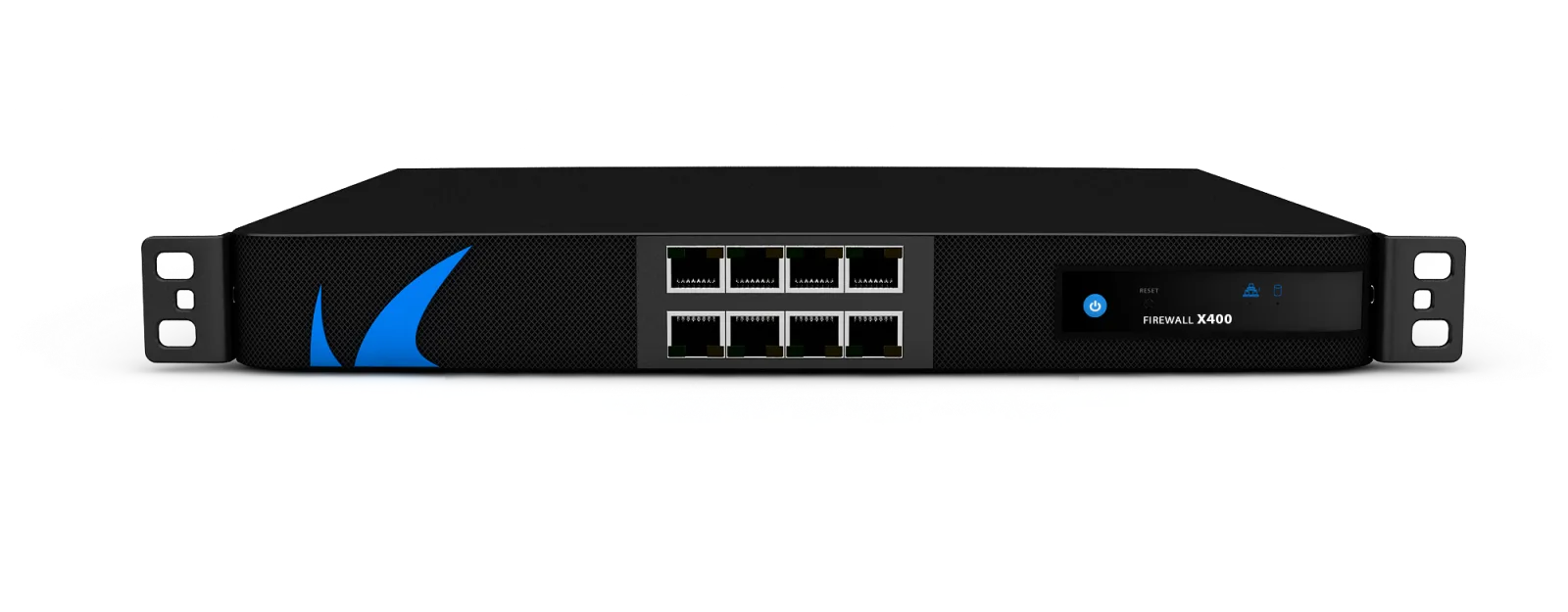
Image: Wikimedia Commons - Firewall-X400, Cuda-mwolfe, CC BY-SA 4.0. Optimized as WebP.
Which Criteria Should Drive the Comparison?
A firewall comparison becomes weak when it starts with “which brand is best?” The better question is this: which platform lets the organization manage its traffic model, operating team, existing network architecture, and security goals with the least practical risk?
Compare at least these dimensions:
- real internet-edge and internal traffic throughput
- expected performance with IPS, antivirus, application control, and URL filtering enabled
- SSL/TLS inspection capacity and exception handling
- SD-WAN, routing, and branch topology requirements
- centralized management, logging, and reporting expectations
- identity, NAC, SIEM, EDR, and SOC integrations
- renewal licensing, support, and operational learning cost
For that reason, do not decide only by the firewall throughput number in a datasheet. Ask for at least 3 profiles: firewall-only, NGFW services enabled, and a realistic profile that includes SSL inspection or decryption impact.
When Does Fortinet Firewall Make More Sense?
Fortinet Firewall is often strong in branch, campus, and distributed network projects. The main advantage of FortiGate is its convergence of networking and security functions in one platform. Fortinet describes FortiGate NGFW solutions as flexible across physical, virtual, and cloud environments, with Secure SD-WAN, dynamic segmentation, and Security Fabric integrations.
Fortinet is commonly a strong candidate when:
- there are many branches and SD-WAN is part of the project
- firewall, VPN, routing, switching, access point, and endpoint visibility should live in one ecosystem
- price/performance and license simplification matter
- centralized operations will use FortiManager and FortiAnalyzer
- the team already knows FortiGate, reducing the learning curve
The risks are also clear:
- undersizing the model can hurt capacity once SSL inspection or IPS is enabled
- Security Fabric value appears only when products and logs are integrated correctly
- large environments still need written rule standards and review processes
On the delivery side, this maps directly to Hardware and Software Solutions, especially Router, Switch and Firewall Deployment Service.
When Does Palo Alto Networks Make More Sense?
Palo Alto Networks NGFW is strong in application identity and policy precision. PAN-OS documentation explains that App-ID identifies and controls applications regardless of port, protocol, or encryption status. This shifts the design question from “is port 443 open?” to “which application, user, and risk context does this traffic represent?”
Palo Alto Networks is commonly a strong candidate when:
- application-based access control is critical
- decryption policy, URL filtering, and threat prevention will be used maturely
- Panorama or Strata Cloud Manager will manage a broad deployment
- the security team is mature in zone design, rule hygiene, and policy review
- SaaS, data center, and user traffic need detailed visibility
The main caution is cost and operational maturity. Palo Alto gives teams a strong policy language, but the investment loses value if zone design, decryption exceptions, rulebase cleanup, and licensing are not planned.
When Does Cisco Secure Firewall Make More Sense?
Cisco Secure Firewall becomes especially strong when the organization has already invested in Cisco networking and security operations. Cisco's Secure Firewall Threat Defense documentation set remains active with current data sheets, compatibility guides, release notes, and FMC configuration guides. Cisco's FMC access control documentation positions intrusion and file policies as a final defensive inspection layer in the access-control flow.
Cisco is commonly a strong candidate when:
- Cisco routing, switching, ISE, or Secure Client are already widespread
- the organization prefers a Talos, Snort, and FMC operating model
- security operations already align with Cisco events, policies, and upgrade processes
- migration or consolidation will stay inside the Cisco ecosystem
- large network teams need role-based management and central change control
The main caution is management complexity. FMC, FTD, licensing, upgrades, and policy behavior need to be documented carefully. Cisco makes the most sense when it compounds the value of an existing Cisco ecosystem.
Short Comparison Table
| Criterion | Fortinet FortiGate | Palo Alto Networks NGFW | Cisco Secure Firewall |
|---|---|---|---|
| Strength | SD-WAN, network-security convergence, price/performance | App-ID, advanced policy model, decryption maturity | Cisco ecosystem, Talos/Snort, FMC operations |
| Typical use | Branch, campus, distributed enterprise, hybrid network | High-visibility data center and user traffic | Cisco-heavy networks and centralized security operations |
| Management | FortiManager, FortiAnalyzer, Security Fabric | Panorama, Strata Cloud Manager | Firewall Management Center, CDO options |
| Critical check | Real capacity with IPS and SSL inspection enabled | Decryption design and license scope | FMC/FTD version, compatibility, and upgrade process |
| Buying risk | Choosing an undersized model | Underestimating total license cost | Underestimating management complexity |
Technical Checklist Before Purchase
- Internet, data center, east-west, and VPN traffic were measured separately.
- Expected throughput with NGFW services enabled was requested.
- SSL/TLS inspection pilot scope, CA distribution, and bypass list were defined.
- SD-WAN, routing, and HA topology were included in the design.
- SIEM or centralized reporting log flow was clarified.
- License scope was compared with 3-year and 5-year total cost of ownership.
- Team skill and management-tool learning cost were included.
- Migration and rollback plans from the old firewall were documented.
Related Content
- How Does a Fortinet Firewall Work? FortiGate Packet Flow Guide
- What Is FortiGate SSL Inspection and How Should It Be Planned?
- How to Configure FortiGate VLANs
- How to Design Zero Trust Network Architecture with Fortinet
Next Step with Leon-X
Choosing between Fortinet, Palo Alto, and Cisco requires more than product sheets. Traffic profile, existing network architecture, security policy, licensing model, and team operations need to be evaluated together. Leon-X supports brand-neutral firewall selection, deployment, and migration planning through Hardware and Software Solutions, especially Router, Switch and Firewall Deployment Service. For policy governance, Business Management Services and Network Security Policy Management help make the rulebase sustainable. To review your current architecture or request a proposal, continue through the Contact page.
Related pages:
- Hardware and Software Solutions
- Router, Switch and Firewall Deployment Service
- Business Management Services
- Network Security Policy Management
- Contact
Frequently Asked Questions
Is Fortinet or Palo Alto better?
There is no universal answer. Fortinet is often strong for SD-WAN, branch rollout, and price/performance. Palo Alto Networks is often stronger for application identity, advanced security policy, and decryption management. The right answer depends on the real traffic profile and operating team.
Who should consider Cisco Secure Firewall?
Cisco Secure Firewall is especially relevant for organizations already using Cisco networking, Cisco ISE, Secure Client, Talos/Snort, and FMC operations. Without that ecosystem, management complexity should be evaluated carefully.
Why is the datasheet firewall throughput not enough?
The firewall throughput number usually does not represent the same capacity with all security services enabled. IPS, antivirus, URL filtering, application control, and SSL inspection can change the real sizing decision.
How long does a firewall migration take?
A small branch migration can be completed in a few days. A data center or multi-branch migration can take several weeks when discovery, policy cleanup, pilot testing, migration, and rollback planning are included.