Teams looking for a VMware datacenter design guide usually need more than a working virtualization stack. They need a platform that can scale, stay manageable, and behave predictably during maintenance and failure scenarios. The short answer is this: in the March 24, 2025 context, strong VMware datacenter design requires compute standardization, clear cluster boundaries, a deliberate management plane, thoughtful network and storage separation, and an operating model that can survive growth. This guide is written for teams building or redesigning a vSphere-based datacenter architecture.
This guide is especially for:
- VMware administrators
- datacenter and infrastructure architects
- IT teams redesigning a growing virtualization platform
- decision-makers planning a new enterprise vSphere environment
Quick Summary
- Datacenter design is more than installing ESXi hosts.
- Compute, management, network, and storage must be planned together.
- Cluster boundaries should follow workload and operating logic.
- Availability, capacity, and maintenance model should be defined early.
- Management and visibility are core design layers.
- That is why strong VMware datacenter design is an operating platform model, not just a technology list.
Table of Contents
- Where Does VMware Datacenter Design Start?
- How Should Compute and Cluster Layers Be Structured?
- Why Should the Management Plane Be Designed Separately?
- Which Networking and Storage Mistakes Are Most Common?
- How Should Operations and Lifecycle Be Planned?
- A Practical 30-Minute Datacenter Design Check
- Frequently Asked Questions
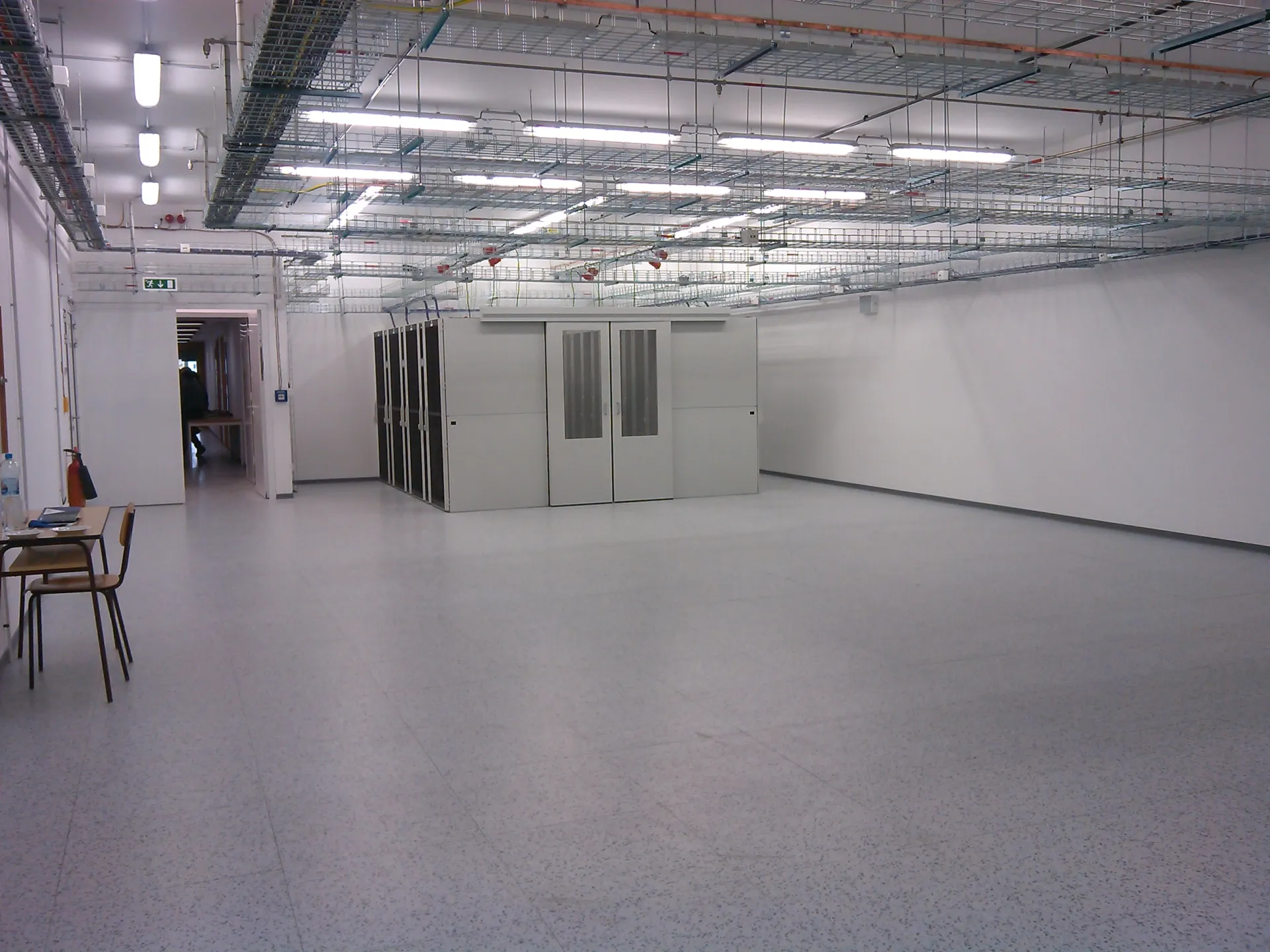
Image: Wikimedia Commons - CERIT data center 2014-09-19 (1).
Where Does VMware Datacenter Design Start?
VMware datacenter design should begin with architectural boundaries, not product checklists. Teams should clarify questions such as:
- which workloads belong on the same platform
- how much growth is expected
- how much capacity headroom is needed for maintenance
- which layers must remain highly available
- how management and access will work
A solid design covers not only normal operation, but also maintenance windows, failure events, and capacity expansion.
How Should Compute and Cluster Layers Be Structured?
The compute layer is the foundation of the platform, but it is not enough on its own. Similar host profiles, sensible cluster boundaries, and a capacity model that survives failures need to be designed together. Mixing hardware generations without a plan may look flexible at first, but it usually creates operational friction later.
Healthier compute and cluster design usually includes:
- host standardization
- workload-driven cluster boundaries
- reserved capacity for maintenance and failure
- simple policies that support HA and DRS behavior
This approach prepares the platform for growth rather than only for today’s load.
Why Should the Management Plane Be Designed Separately?
Many organizations treat the management plane as a dashboard added later. In reality, vCenter, identity model, permissions, alerting, logs, inventory, and patch workflows are all part of the architecture itself. If the management layer is weak, even a technically strong platform becomes difficult to operate.
Critical areas in this layer include:
- vCenter availability
- role-based access control
- monitoring and alert coverage
- logging and event visibility
- patch and upgrade planning
Designing the management plane deliberately is what creates visibility and operational control as the environment grows.
Which Networking and Storage Mistakes Are Most Common?
In VMware datacenters, the real bottleneck is often not CPU but networking and storage design. When management, vMotion, storage, and production traffic are not planned intentionally, problems tend to appear only under load.
The same is true for storage:
- is datastore access consistent across hosts
- does the performance tier match workload classes
- does network design affect storage latency
- can the same behavior be preserved during expansion
Even if different teams own these layers, they still need one architectural model.
How Should Operations and Lifecycle Be Planned?
Good datacenter design is not measured only by day-one setup. Update cycles, capacity expansion, hardware refresh, and fault handling should be planned from the beginning. Without lifecycle planning, the platform often becomes heterogeneous and harder to manage after the first year.
The operating model should include:
- standard naming and inventory model
- repeatable maintenance workflows
- capacity and performance visibility
- procedures aligned with change management
- version and hardware lifecycle planning
A design is truly successful only if it stays understandable and manageable over time.
A Practical 30-Minute Datacenter Design Check
To assess an existing VMware datacenter quickly:
- Check how standardized the host profiles are.
- Review whether cluster boundaries match workload and operational logic.
- Evaluate permissions, alerting, and visibility in the management plane.
- Validate network segmentation and storage access model.
- Calculate remaining capacity during maintenance and failure scenarios.
- Confirm whether patch, upgrade, and hardware refresh plans are defined.
Even this short review can show whether the environment behaves like a real platform or only a collection of hosts.
Related Content
- VMware Enterprise Virtualization Architecture
- VMware High Availability Architecture
- VMware Cluster Design Guide
Next Step with Leon-X
When datacenter design is done properly, organizations operate more than virtual machines. They run a scalable, visible, and manageable platform. Leon-X helps teams build stronger VMware datacenter architectures by aligning compute, management, networking, storage, and operational layers together.
Related pages:
Frequently Asked Questions
What should be considered first in a VMware datacenter design guide?
That it is not only about host deployment, but about full platform architecture.
Why are cluster boundaries so important?
Because workload placement, fault tolerance, and operating model are often shaped by cluster boundaries.
Why should the management plane be treated separately?
Because visibility, permissions, alerting, and maintenance workflows directly affect platform sustainability.
What is the most common networking and storage mistake?
Designing traffic separation and datastore behavior without thinking about growth and failure scenarios.
How do you recognize strong VMware datacenter design?
If the platform stays manageable during growth, maintenance, and failure, the design is strong.
Conclusion
VMware datacenter design is not only about getting virtualization to run. In the March 24, 2025 context, the stronger approach is designing compute, clusters, management, networking, storage, and operations together as one sustainable datacenter platform.