VMware ESXi audit logging is not just about keeping a few host log files somewhere on disk. A stronger model identifies which records carry audit value, makes them persistent, sends them to a central platform, and ties them to access review and incident analysis. The short answer is this: for ISO 27001, ESXi audit logging becomes defensible when persistent logging, local audit record storage, remote syslog, privilege review, and validation routines are operated as one control set.
This guide is especially useful for:
- VMware and vSphere administrators
- information security and compliance teams
- SOC, SIEM, and centralized logging teams
- IT managers preparing for ISO 27001 audits
Quick Summary
- Broadcom states that ESXi logs are stored by default on scratch volume or ramdisk, so persistent disk or remote syslog design matters for auditability.
Syslog.global.logDir,Syslog.global.logHost, andSyslog.global.logDirUniqueare central to durable and separated host logging.- Broadcom KB
408693shows that local audit logging requires a specific disable-change-enable flow and that the target audit folder must not exist beforehand. - Broadcom KB
386607shows that audit record storage can silently become inactive after scratch reconfiguration or upgrade. - SSL-based remote syslog should use FQDN instead of IP when certificates are involved.
- If multiple ESXi hosts write to the same datastore path without unique directories, log locking and unreliable audit trails can occur.
Table of Contents
- What Does ESXi Audit Logging Cover in ISO 27001 Terms?
- Why Is Persistent Logging the First Control?
- How Should Local Audit Records Be Designed?
- How Should Remote Syslog and SIEM Flow Be Built?
- What Mistakes Are Most Common?
- Related Content
- How Should the ISO 27001 Evidence Set Be Built?
- Checklist
- Next Step with Leon-X
- Frequently Asked Questions
- Sources

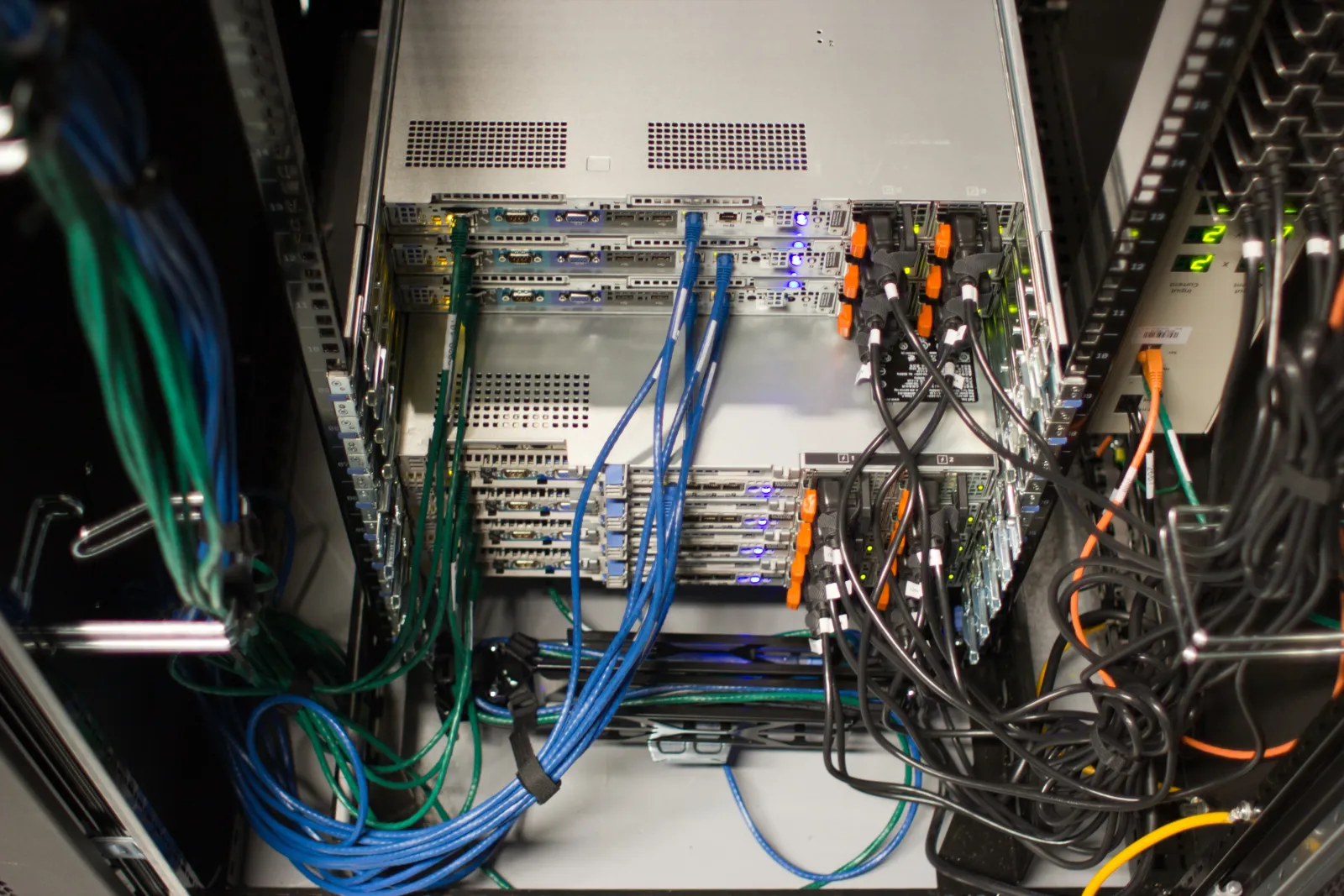
Image: Wikimedia Commons - NetworkOperations.
What Does ESXi Audit Logging Cover in ISO 27001 Terms?
ISO/IEC 27001 does not require one vendor checkbox. It requires a risk-based control model for confidentiality, integrity, and availability. In that context, ESXi audit logging should not be reduced to hostd.log or vmkernel.log alone. The real questions are:
- which events are retained persistently
- which records reach a central platform
- who reviews the records
- how a broken logging path is detected
- how the design can be demonstrated during audit
That is why ESXi audit logging should include:
- persistent local logging
- local audit record storage
- remote syslog forwarding
- retention and rotation logic
- visibility into access and privilege changes
- periodic test and review records
From an ISO 27001 standpoint, a strong position is not “we generate logs,” but “we know which logs matter, how long they last, who reviews them, and how logging failures are detected.”
Why Is Persistent Logging the First Control?
Broadcom KB 302451 explains that ESXi logs internally to ramdisk and that persistent logging requires either a persistent scratch location or remote syslog forwarding. That matters because purely temporary logs can lose audit value after reboot, storage changes, or host issues.
Broadcom KB 318939 identifies five main syslog settings:
Syslog.global.logDirSyslog.global.logHostSyslog.global.logDirUniqueSyslog.global.defaultRotateSyslog.global.defaultSize
These should be read in two layers:
1. Local persistence
Keeping logs on persistent scratch or datastore supports short-term troubleshooting and host-local review.
2. Remote transmission
For long-term retention, central correlation, and stronger audit evidence, remote syslog or SIEM flow is needed. Broadcom also states clearly that retention and splitting of remotely received logs are controlled by the syslog server, not by ESXi. So forwarding alone is not enough; the receiving platform’s retention rules must be defined separately.
Without persistent logging, the audit chain becomes fragile. During an ISO 27001 review, that weakens the organization’s ability to reconstruct events.
How Should Local Audit Records Be Designed?
Broadcom KB 408693 shows that local audit logging uses /scratch/auditLog by default and that moving the audit directory requires a strict operational sequence. Specifically:
- local audit logging cannot be moved while it is active
- existing local audit logging must be disabled first
- the new target folder must not already exist
- ESXi creates the directory automatically during enablement
This matters operationally because teams often see an Internal error in the UI and assume the feature is still functioning.
Broadcom KB 386607 highlights another risk: after ESXi 8.0 U3e upgrades or scratch reconfiguration, audit record storage can become inactive. If esxcli system auditrecords get shows:
Audit Record Storage Active: false
the audit-record chain is effectively broken. In ISO 27001 terms, that is not only a platform warning. It is a gap in evidence generation and post-incident review capability.
For that reason, local audit records should at minimum include:
- periodic validation of auditrecords status
- post-upgrade and post-scratch-change verification
- path accessibility and writability checks
- central alerting for disabled audit record storage
How Should Remote Syslog and SIEM Flow Be Built?
An ESXi audit logging model should not stop at local storage. Broadcom KB 318939 documents tcp://, udp://, and ssl:// formats for remote syslog, requires esxcli system syslog reload after changes, and recommends connectivity testing.
In practice, the right model includes:
1. Explicit remote host definition
If Syslog.global.logHost is blank, no forwarding exists. This setting should be standardized through host profiles or an agreed host baseline.
2. Reachability and live-path testing
Broadcom recommends port testing such as nc -z <RemoteHostname> 514. A live test message can also be generated with:
esxcli system syslog mark --message "Syslog Test Message"
That validates real transport, not only saved configuration.
3. FQDN discipline for SSL syslog
Broadcom KB 432290 shows that SSL syslog can fail when ESXi is configured with an IP address while the certificate is issued for FQDN only. In other words:
ssl://ip:6514can failssl://fqdn:6514is the stronger pattern
4. SIEM integration
Audit logging becomes much more valuable when centrally correlated. That is why this topic should be connected to Hardware & Software Services and specifically to SIEM and Security Incident Management Integration. On the virtualization side, Enterprise Virtualization Platforms Sales and Licensing supports standardization of host profiles and logging baselines.
What Mistakes Are Most Common?
Not using unique directories on shared datastore targets
Broadcom KB 387609 explains that if multiple ESXi hosts write logs to the same location, file locking and Device or resource busy errors can occur. That is why Syslog.global.logDirUnique matters in multi-host environments.
Assuming syslog is working because the setting exists
A saved configuration does not prove that logs are arriving. A mark test and central visibility check are necessary.
Ignoring disabled local audit-record status
If Audit Record Storage Active: false is visible only to a CLI user, the control is immature. That state should be tied to central review and alerting.
Treating retention as an ESXi responsibility
Broadcom states clearly that remote retention is handled by the syslog server, not ESXi. Retention, archive, and export policy must therefore be managed on the receiving platform.
Related Content
- How to Implement VMware Monitoring for ISO 27001 (2026 Guide)
- VMware ESXi Hardening Guide for ISO 27001 Compliance
- VMware Datastore Encryption for ISO 27001: Practical Guide
How Should the ISO 27001 Evidence Set Be Built?
A strong audit package should include more than screenshots. A better ESXi audit-logging evidence set combines:
esxcli system syslog config getoutputsesxcli system auditrecords getoutputs- proof that test syslog messages arrived centrally
- host-profile or baseline documentation
- retention and review responsibility matrix
- incident or ticket records for logging failures
- privilege review records
The strongest examples usually include:
- syslog validation records from the last
12 months - post-upgrade checks for auditrecords state
- documented standards for unique log directory usage
- SIEM correlation examples based on ESXi logging
At this stage, governance matters too, which is why Cybersecurity Assessment Service can complement the technical rollout with control review and audit-readiness work.
Checklist
-
Syslog.global.logDir,logHost, andlogDirUniquewere standardized -
esxcli system auditrecords getwas validated across relevant hosts - Local audit-record storage path and writability were tested
- Audit record status was revalidated after scratch changes or upgrades
- Remote syslog destination was verified with a live test message
- FQDN and certificate alignment were checked for SSL syslog
- ESXi audit events were correlated in SIEM or central logging
- Retention, review, and audit export procedures were documented
Next Step with Leon-X
VMware ESXi audit logging is not only about collecting files. It is about building a record chain that remains useful during incidents and defensible during audits. Leon-X helps design host logging standards, central correlation, retention policy, and audit evidence workflows together so the VMware environment becomes more observable and more audit-ready.
Relevant pages:
- Hardware & Software Services
- SIEM and Security Incident Management Integration
- Enterprise Virtualization Platforms Sales and Licensing
- Contact
Frequently Asked Questions
Are ESXi audit logs and syslog the same thing?
No. ESXi audit logging includes local audit records, syslog forwarding, persistence design, and central review. Syslog is only one part of the model.
Is local scratch storage alone enough?
Not strongly. Reboots, scratch changes, or host issues can reduce visibility. Remote syslog and SIEM integration make the control much more reliable.
Why is using an IP address risky for SSL syslog?
Broadcom KB 432290 shows that certificate validation can fail when ESXi connects by IP while the certificate is issued for FQDN only.
Can all ESXi hosts use the same log folder on shared storage?
That is not recommended. Broadcom KB 387609 shows that shared paths can lead to file locks and unreliable logging behavior.
Which records help most during ISO 27001 audit?
Persistent logging settings, auditrecords state, test-message validation, retention policy, and review records form the most defensible evidence set.
Sources
- ISO/IEC 27001 standard
- Broadcom KB 318939 - Configuring syslog on ESXi
- Broadcom KB 302451 - Determining whether an ESXi host has persistent logging
- Broadcom KB 408693 - Configuring Local Audit Logging ESXi hosts fails with the error: "Internal error"
- Broadcom KB 386607 - ESXi shows auditing disabled events after upgrading to 8.0 U3e
- Broadcom KB 432290 - Configuring ESXi syslog over SSL fails with error: "certificate verify failed: IP address mismatch"
- Broadcom KB 387609 - Error "Device or resource busy" when viewing log files on the ESXi host
- Wikimedia Commons - NetworkOperations