Comparing VMware vSAN with a traditional SAN is not only about comparing two storage products. It is about comparing two different infrastructure operating models. The short answer is this: in the January 19, 2026 context, vSAN produces shared storage behavior from host resources inside the cluster, while a traditional SAN presents storage as a more separate, independent platform built around arrays and LUN-style thinking. This guide is written for teams that want a clearer way to decide which model fits their environment.
Quick Summary
- In Broadcom terminology, vSAN is a software-defined shared storage layer tied directly to cluster resources.
- In a traditional SAN model, storage is usually reasoned about through separate platforms, arrays, and LUNs.
- vSAN tends to grow compute and storage more closely together, while traditional SAN keeps those layers more separate.
- In vSAN, storage policy and cluster networking are more central parts of the design.
- In traditional SAN, storage-team independence and platform separation can remain stronger.
- That is why the decision should be made through operating model, growth model, and team structure, not just feature lists.
Table of Contents
- What Is the Core Architectural Difference?
- How Does the Scaling Model Differ?
- Operational and Team-Model Differences
- Capacity and Policy Differences
- When Does vSAN Make More Sense?
- When Does a Traditional SAN Make More Sense?
- First 15-Minute Checklist
- Frequently Asked Questions
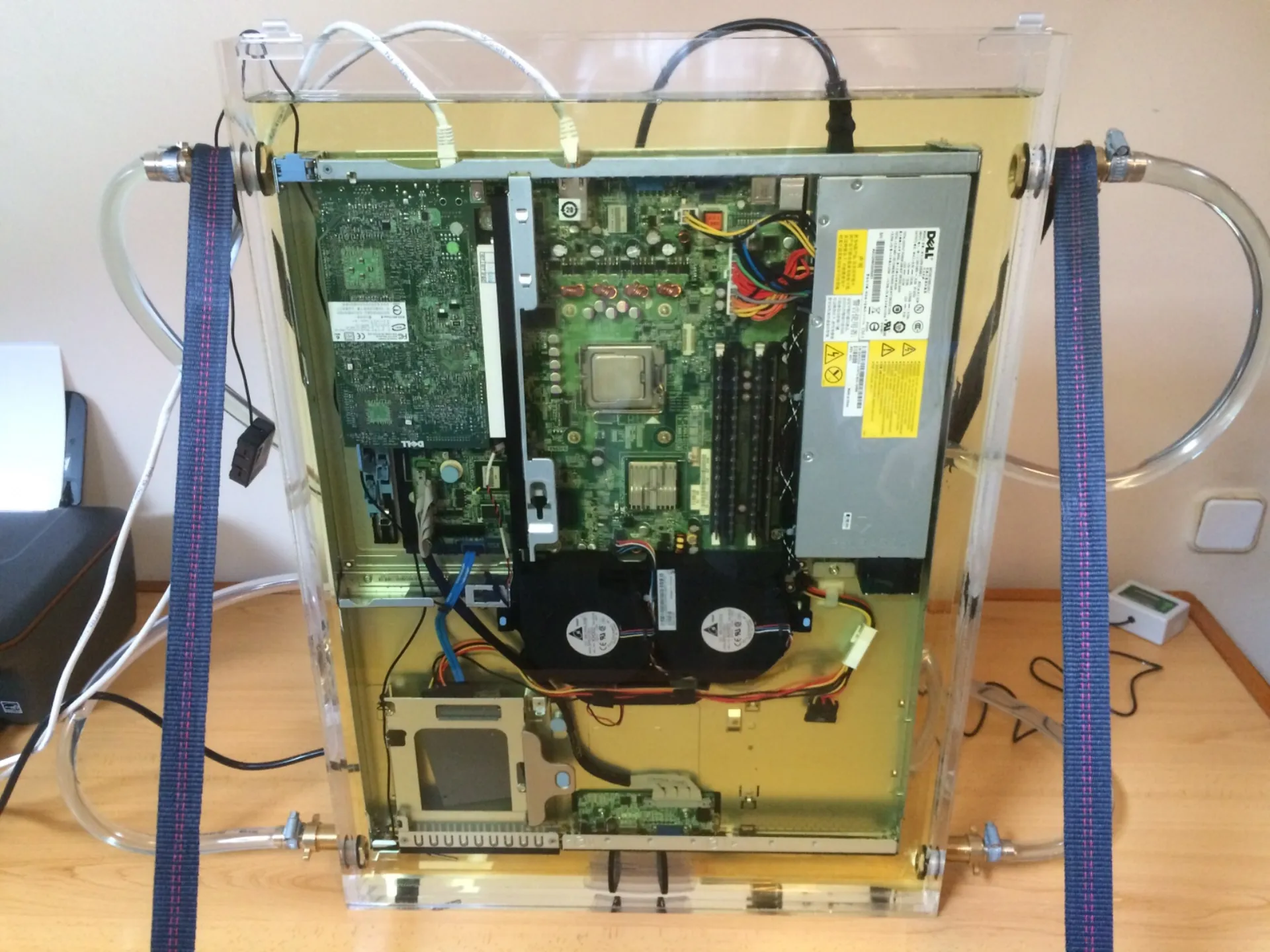
Image: Wikimedia Commons - Single-server-immersion-cooling.
What Is the Core Architectural Difference?
The biggest difference is where storage sits in the infrastructure model.
- vSAN: storage behavior is produced from resources inside the cluster
- Traditional SAN: storage behavior is presented from a more separate storage platform
That is not only a topology difference. It is an operating-model difference. In vSAN, storage becomes a natural part of cluster design. In traditional SAN, storage is often managed as a more distinct platform.
How Does the Scaling Model Differ?
The scaling model often feels very different between vSAN and traditional SAN.
vSAN approach
- compute and storage often grow together
- expansion is discussed in terms of cluster resources
- the hyperconverged model is more central
Traditional SAN approach
- storage can often grow more independently
- compute and storage investment can be planned separately
- an existing storage platform lifecycle can remain more isolated
That is why the real question is not “which one is newer?” but “which growth model matches our environment better?”
Operational and Team-Model Differences
In vSAN, storage operations and cluster operations are much more closely connected. For some teams, that is simplifying. For others, it reduces role separation.
In a traditional SAN model:
- the storage team can remain more independent
- platform ownership can stay more clearly separated
- compute and storage change windows can be managed differently
In vSAN, cluster health and storage behavior are more intertwined, so the team model needs to support that.
Capacity and Policy Differences
In vSAN, storage policy is far more central. Different workload classes in the same cluster can behave differently, and usable capacity can change depending on policy assumptions.
In a traditional SAN model, capacity and behavior are more often reasoned about through platform standards, LUNs, tiers, or array design.
That creates a real difference:
- in vSAN, capacity analysis without policy context can be incomplete
- in traditional SAN, platform standards often dominate the discussion
Both models require capacity planning, but the most important variables are not identical.
When Does vSAN Make More Sense?
vSAN is often a stronger fit when:
- you do not want to operate a separate storage platform
- you want a hyperconverged model
- you expect compute and storage to scale together
- you want a policy-driven storage approach
Related guides:
When Does a Traditional SAN Make More Sense?
A traditional SAN may be stronger when:
- there is already a strong SAN investment to preserve
- storage is expected to remain independently managed
- compute and storage lifecycle planning should stay separate
- the same storage platform will serve more than only one cluster
That is why a more “modern-looking” vSAN architecture is not automatically the right answer.
First 15-Minute Checklist
- The team agreed that this is an operating-model decision, not only a feature comparison
- It is clear whether compute and storage should scale together or separately
- The need for an independent storage-team role was reviewed
- The importance of policy-driven behavior was clarified
- Existing SAN investment and migration cost were evaluated
- Hyperconverged readiness and cluster-network readiness were reviewed
- A test scenario compared the operational impact of both models
Next Step with Leon-X
The right decision between vSAN and a traditional SAN does not come from feature tables alone. Leon-X helps teams decide which storage architecture best matches their team structure, growth model, and operational standards.
Related pages:
Frequently Asked Questions
What is the biggest difference between vSAN and a traditional SAN?
The biggest difference is whether storage behavior is created inside the cluster or presented from a more separate storage platform.
Is vSAN always better than a traditional SAN?
No. The better choice depends on team structure, investment history, and growth model.
Why can a traditional SAN still be the right choice?
Because platform independence, investment preservation, and a separate storage operating model can still be major advantages.
Why is policy more central in vSAN?
Because policy more directly shapes storage behavior and usable capacity in the cluster model.
What is the first question teams should ask?
The first useful question is whether the environment wants to operate compute and storage together or keep them more separate.
Conclusion
In a VMware vSAN versus traditional SAN comparison, the real issue is not just comparing two technologies but comparing two different storage operating models. In the January 19, 2026 context, the right approach is to weigh hyperconverged simplicity against separate-platform independence based on your own team and growth model.