The 7 most common mistakes in 5651 compliance usually come from shortcuts—“we enabled firewall logging” or “we bought a compliant box”—not from ignoring the statute text. Short answer: Compliance = clear scope + DHCP/NAT/identity chain + NTP/timestamps + central retention + process. Until these seven mistakes are closed, a product or SIEM investment often fails to produce evidence.
This guide is written for:
- IT and managers starting a 5651 project
- Teams that bought logging but struggle with legal queries
- Operations running guest Wi-Fi and office internet together
- Decision makers who mixed KVKK and 5651 into one procedure
Quick Summary
- Costliest mistake: wrong scope (“we’re not an ISP”).
- Technical break point: firewall-only logs without DHCP/NAT.
- Operational break: open guest Wi-Fi and missing NTP.
- Buying break: trusting a label without PoC.
- Frame: What Is 5651?.
- Solution selection: How to Choose a Logging Solution.
Table of Contents
- Mistake 1: Scope Myth
- Mistake 2: Firewall Logs Only
- Mistake 3: Open Guest Wi-Fi
- Mistake 4: Treating On-Box Disk as Archive
- Mistake 5: Ignoring NTP and Timestamps
- Mistake 6: Mixing 5651 with KVKK
- Mistake 7: Buying by Label
- Fix Roadmap
- Related Articles
- Checklist
- Next Step with Leon-X
- Frequently Asked Questions
- Sources
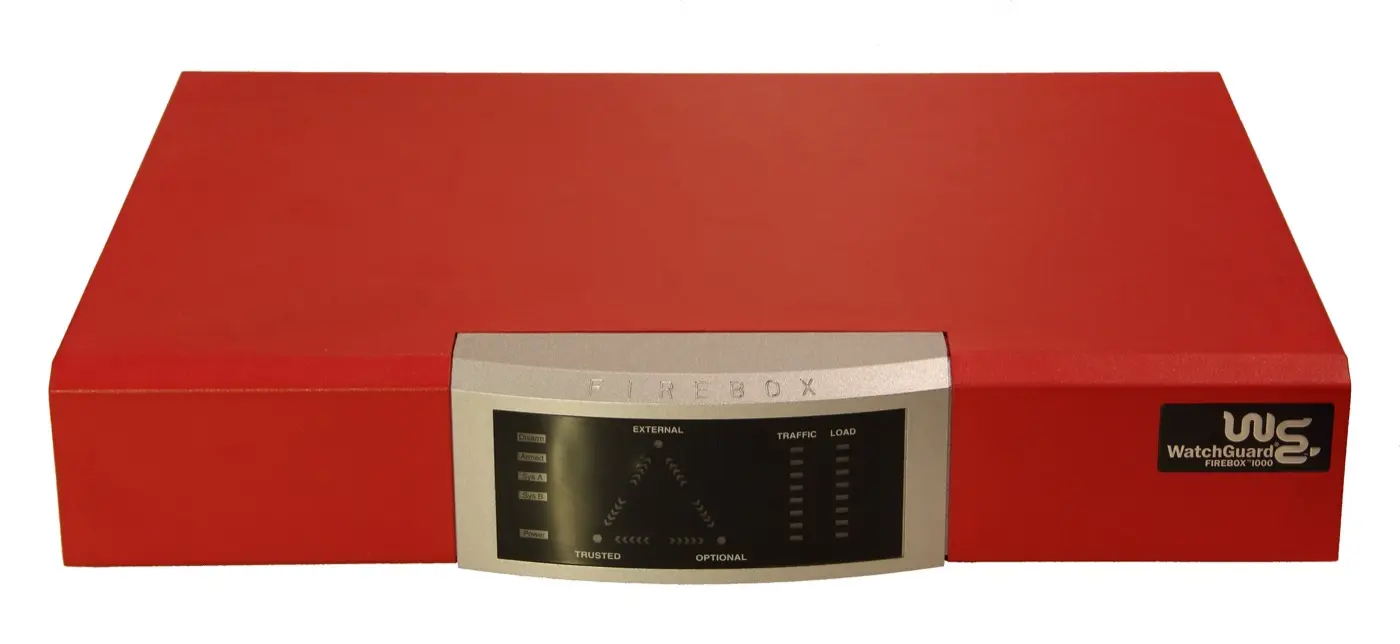
Image: Wikimedia Commons - Watchguard Firebox 1000 1 (example enterprise security / log-source form factor).
Mistake 1: Scope Myth
“We’re not a telco, so 5651 doesn’t apply.” Most companies that share internet with staff or guests are factually in scope. Start with a scope inventory: who gets internet?
Fix: 5651 Logging — Who Is Obligated?, What Is 5651?.
Mistake 2: Firewall Logs Only
Traffic logging is on; DHCP leases and NAT source ports are missing. On a single public IP, “who did it?” breaks.
Fix: evidence chain DHCP → NAT → identity — Evidentiary Value IT, FortiGate Logging.
Mistake 3: Open Guest Wi-Fi
Anonymous SSID, no Captive Portal, no guest VLAN. The identity link is broken from the start; bridging into the staff network raises risk.
Fix: Corporate Wi-Fi 5651, Network Architecture Mistakes, Zero Trust + 5651.
Pro Tip: Before opening a guest SSID, pass a
15-minutePoC: Captive Portal + separate DHCP + NAT logs landing centrally.
Mistake 4: Treating On-Box Disk as Archive
When the device disk fills, it overwrites. SOC hot indexes are deletable. Legal retention (common frame 2 years) needs a controlled central archive.
Fix: Archiving, SIEM and 5651.
Mistake 5: Ignoring NTP and Timestamps
Clock drift (>1–2 s) breaks both correlation and evidence. Untimestamped CSVs weaken the “it existed unchanged” claim.
Fix: Log Integrity. Monitor NTP on APs, firewalls, and SIEM.
Mistake 6: Mixing 5651 with KVKK
Feeding the same SIEM can be fine; managing both under one policy is not. 5651 is access evidence; KVKK is a personal-data regime.
Fix: 5651 vs KVKK, KVKK–ISO Integration.
Mistake 7: Buying by Label
Buying a box that “says 5651” without PoC. Contracts get signed before NAT/DHCP mapping, delete rights, and archive search are tested.
Fix: How to Choose a Logging Solution — in PoC, map public IP+port → user/MAC.
Fix Roadmap
| Week | Focus |
|---|---|
1 | Scope + source inventory (firewall, DHCP, Wi-Fi) |
2 | Validate NAT/DHCP logs + NTP |
3 | Guest Captive Portal / VLAN separation |
4 | Central archive + timestamps + delete RBAC |
5–6 | Legal-request procedure (1–3 business days SLA) + review |
Related Articles
- What Is 5651? Short Company Guide
- How to Choose a 5651 Logging Solution
- 5651, Cybersecurity, and Evidentiary Value
- Corporate Wi-Fi 5651 Compliance
- SIEM, Syslog and 5651 Architecture
- Log Integrity under 5651
- Difference Between 5651 and KVKK
- Zero Trust with 5651 Compliance
Checklist
- Scope written (staff / guest / customer).
- DHCP + NAT/PAT land in a central archive.
- Guest Wi-Fi has Captive Portal + separate VLAN.
- On-box disk is not the only archive.
- NTP offset
<1–2 s; timestamping active. - 5651 and KVKK policies are separate.
- Product/PoC proved IP+port → user mapping.
- Delete rights separated; legal
SLAdefined. - Retention written (common frame
2 years).
Next Step with Leon-X
These seven mistakes repeat across 5651 projects; fixing them is a chain—not a box. Leon-X lists gaps via Cybersecurity Assessment and builds lasting architecture through SIEM Integration and Network Security, Firewall and IPS/IDS. Start at Contact.
Frequently Asked Questions
Which mistake is most critical?
Scope myths stop projects cold; technically, the most common broken link is logging without NAT/DHCP.
Can mistakes remain after buying logging software?
Yes—without source integration, NTP, guest Wi-Fi, and retention policy, the box is not enough.
Do these 7 apply to small firms?
Yes; on single-public-IP offices, NAT/DHCP mistakes surface even faster.
Does KVKK compliance fix 5651 mistakes?
No. Different purposes: 5651 vs KVKK.
What should we do in week one?
Scope + validate DHCP/NAT logs + NTP check. Then guest Wi-Fi and archive.