Combining Zero Trust with Law No. 5651 compliance means building “never trust by default” access control in the same architecture that produces legally usable internet-access evidence. Short answer: Zero Trust narrows identity and access; 5651 preserves who–when–which IP/port with integrity. One is a security model, the other a legal logging discipline—they do not conflict when designed together. “We deployed ZTNA, so 5651 is done” or “we bought a logger, so we have Zero Trust” are both wrong.
This guide is written for:
- Network and security teams starting a Zero Trust / ZTNA journey
- IT leaders who must own 5651 logging and evidence technically
- Ops teams running guest Wi-Fi and remote access together
- CISOs who want security transformation and legal compliance in one program
Quick Summary
- Zero Trust: verify, least privilege, continuous monitor; 5651: produce access evidence, protect integrity, retain it.
- Shared spine: strong identity, segmentation, central logs, NTP, timestamps.
- ZTNA shrinks VPN exposure but does not remove DHCP/NAT/identity logging needs.
- Guest Wi-Fi under Zero Trust needs a separate zone + Captive Portal; under 5651 it needs a separate log scope.
- 5651 basics: What Is 5651?; evidence: IT Perspective.
- Fortinet ZTNA example: Zero Trust Network Architecture with Fortinet.
Table of Contents
- Why Zero Trust and 5651 Belong Together
- Shared Architecture Map
- Identity, Device, and Access
- Segmentation, Wi-Fi, and NAT Logs
- ZTNA, VPN, and the Evidence Chain
- SIEM: Security + Legal Archive
- 90-Day Joint Roadmap
- Most Common Mistakes
- Related Articles
- Checklist
- Next Step with Leon-X
- Frequently Asked Questions
- Sources
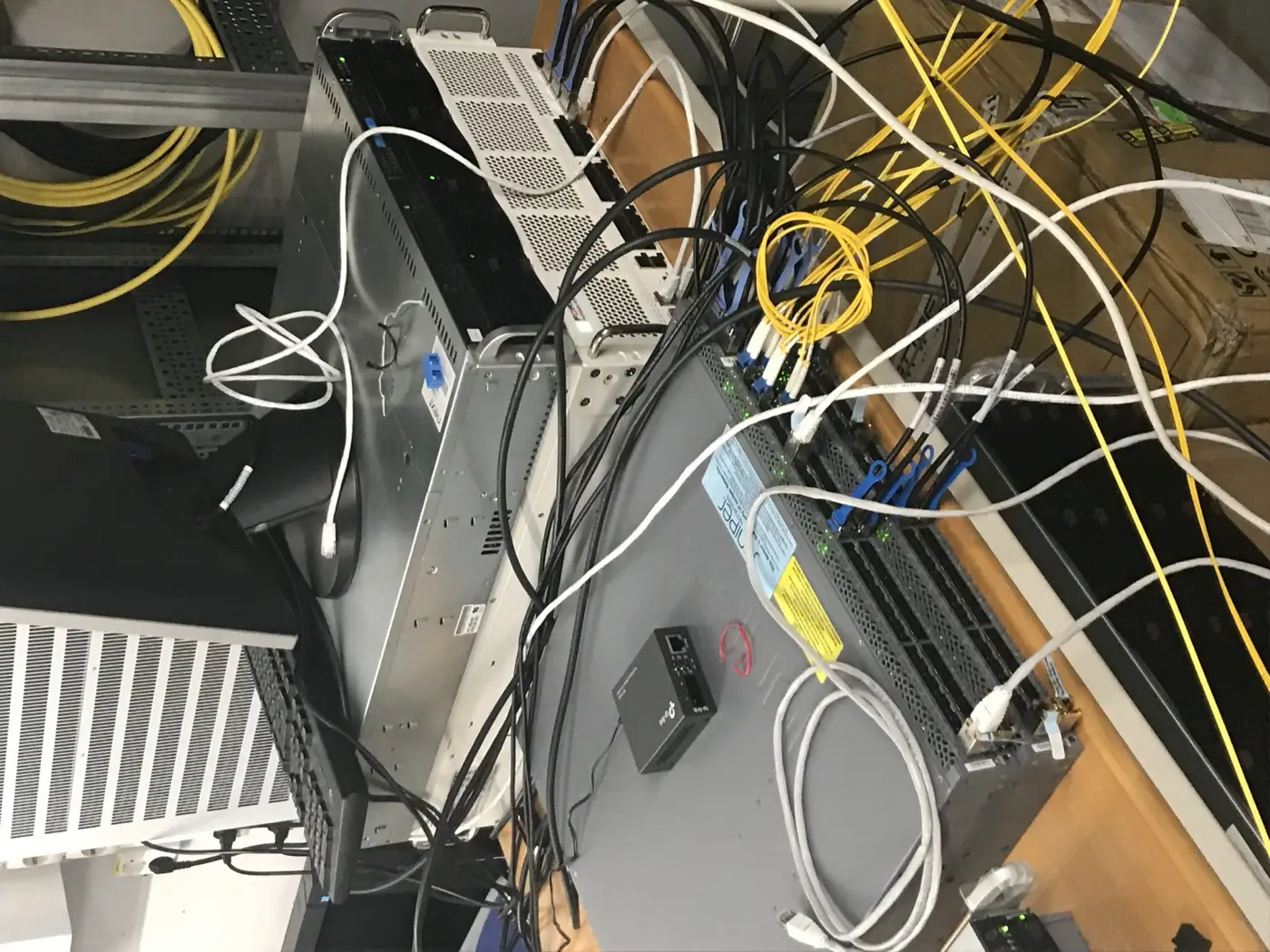
Image: Wikimedia Commons - The Gathering 2019 Switch, server and firewall (identity/access control and log-source context).
Why Zero Trust and 5651 Belong Together
Zero Trust does not trust the network by default; it verifies identity, device posture, and policy every session. 5651 requires organizations that share internet access to keep evidentiary access records. The overlap is identity and traceability.
Short definition:
Zero Trust + 5651 is an integrated design that binds least-privilege access to identity while protecting NAT/DHCP/timestamped records in a legal archive.
5651 overview: What Is 5651?. Logging scope: 5651 Logging.
Shared Architecture Map
| Layer | Zero Trust contribution | 5651 contribution |
|---|---|---|
| Identity | MFA, IdP, device trust | User↔session mapping |
| Network | Zones/VLANs, microseg | DHCP lease separation, guest isolation |
| Access | ZTNA / app-level allow | VPN/ZTNA session + NAT logs |
| Monitoring | Continuous telemetry | Central archive + timestamps |
| Governance | Policy / least privilege | Retention 2-year frame, delete rights |
Network pitfalls: 5651 Network Architecture. Integrity: Log Integrity.
Identity, Device, and Access
Under Zero Trust, “I’m on the LAN” is not trust. For 5651, shared accounts and anonymous guest Wi-Fi weaken the evidence chain.
- One person, one account—no shared admins
- MFA (especially remote access)
- Device posture (EMS / MDM where possible)
- Guests: Captive Portal + separate DHCP pool
- Logging on for every critical allow
FortiGate access control: Access Control ISO 27001. SSL VPN: FortiGate SSL VPN.
Pro Tip: Add a “5651 evidence output” column to every Zero Trust project card: list which log sources each new path (ZTNA, Wi-Fi, VPN) produces.
Segmentation, Wi-Fi, and NAT Logs
Zero Trust segmentation makes 5651 easier:
- Separate staff / server / guest / mgmt zones
- Default-deny from guest to internal servers
- Mandatory NAT/PAT logs on a single public IP
- DHCP lease duration and logs in IPAM/SIEM
VLAN: FortiGate VLAN. Policy: Policy Configuration. Evidence chain: 5651 Evidentiary Value IT.
ZTNA, VPN, and the Evidence Chain
ZTNA grants app-level access and shrinks classic SSL VPN surface. Still:
- ZTNA session logs must reach SIEM
- If egress is still NATed, NAT logs remain mandatory
- App-level access does not erase DHCP needs (especially campus Wi-Fi)
- During VPN→ZTNA migration, do not close old tunnel logging before the new path is proven
Fortinet ZTNA design: Zero Trust with Fortinet. Firewall logging: FortiGate Logging.
SIEM: Security + Legal Archive
| Tier | Purpose | Typical duration |
|---|---|---|
| Hot (SOC) | Alerting / IR | 30–90 days |
| Legal / 5651 | Evidence archive | policy; often 2 years |
| Access control | Who may delete? | Separate role + audit |
A shared syslog pipe is fine; a deletable hot index ≠ legal archive. Architecture: SIEM and 5651. Archiving: 5651 Archiving. ISO monitoring: FortiGate Logging ISO 27001.
90-Day Joint Roadmap
| Period | Zero Trust | 5651 |
|---|---|---|
Days 1–30 | Zone + identity inventory | DHCP/NAT log inventory, NTP |
Days 31–60 | MFA + guest Captive Portal | Timestamp + central archive test |
Days 61–90 | Pilot ZTNA / narrowed VPN | Legal-request procedure + review |
NTP target: offset <1–2 s. Write the retention policy down.
Most Common Mistakes
- Treating ZTNA as a 5651 exemption
- Leaving guest Wi-Fi as an “open zone” outside Zero Trust
- Claiming least privilege with identity-less VPN
- Using the SOC SIEM as the only 5651 archive
- Declaring a Zero Trust project without segmentation
- Expecting evidence from traffic logs without NAT
Related Articles
- What Is 5651? Short Company Guide
- 5651, Cybersecurity, and Evidentiary Value
- Zero Trust Network Architecture with Fortinet
- SIEM, Syslog and 5651 Architecture
- 5651 Network Architecture Mistakes
- Log Integrity under 5651
- How to Configure FortiGate Logging
- Difference Between 5651 and KVKK
Checklist
- Identity (MFA) + device-trust policy defined.
- Staff / guest / server / mgmt zones separated.
- Captive Portal or equivalent guest identity exists.
- DHCP + NAT/PAT land in a central archive.
- NTP aligned (
<1–2 s); timestamping active. - ZTNA/VPN session logs in SIEM.
- SOC hot index separated from legal archive (
2-yearframe). - Legal-request procedure written.
- Zero Trust project cards list 5651 log outputs.
Next Step with Leon-X
Combining Zero Trust with 5651 is identity + segmentation + evidence—not a single appliance. Leon-X finds gaps via Cybersecurity Assessment and connects ZTNA/access with legal archives through Network Security, Firewall and IPS/IDS and SIEM Integration. Start at Contact.
Frequently Asked Questions
Does Zero Trust automatically satisfy 5651?
No. Zero Trust narrows access; 5651 still needs DHCP/NAT, timestamps, and retention.
If we have ZTNA, do we still need VPN logs?
During migration, log both paths. In the steady state, ZTNA sessions plus the NAT/identity chain must cover the required scope.
Does guest Wi-Fi conflict with Zero Trust?
No—guests need a separate trust zone + Captive Portal + separate log scope.
Can one SIEM serve both?
Yes as a shared pipe. Separate hot SOC index from legal-archive policy: SIEM and 5651.
How does KVKK fit?
Three frames (Zero Trust security, 5651 evidence, KVKK personal data) have different purposes: 5651 vs KVKK.