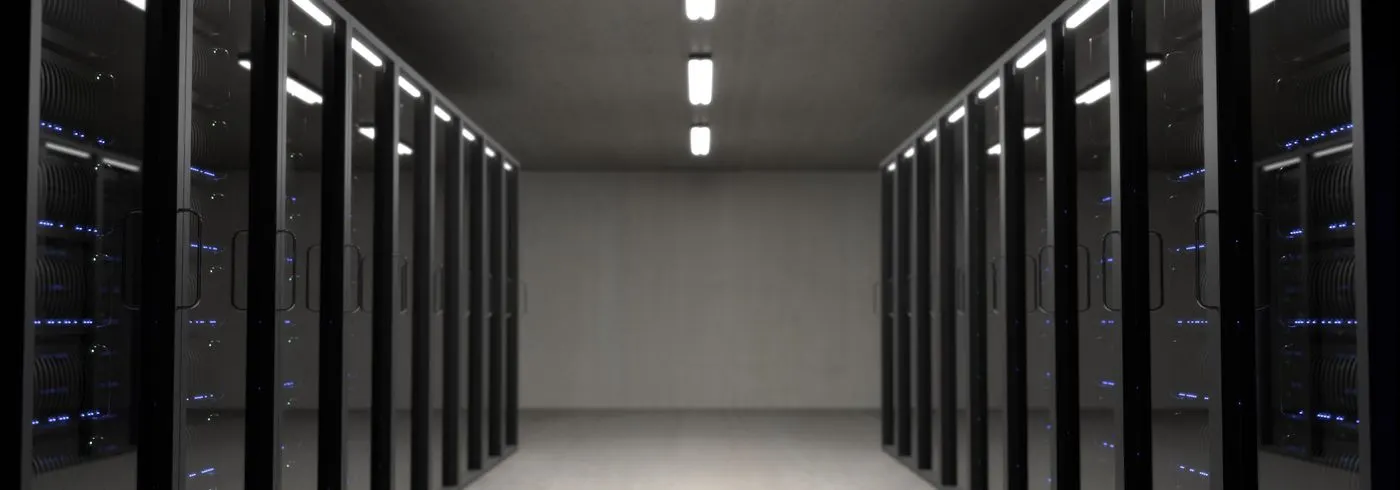
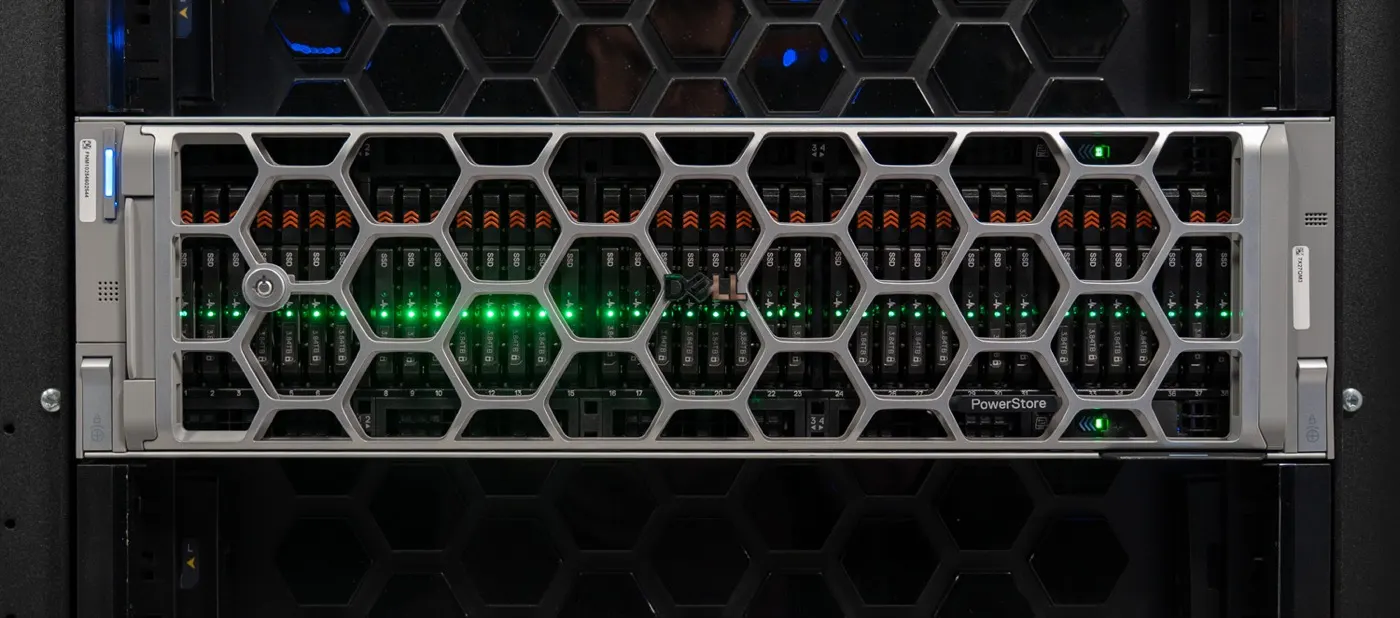
Dell PowerEdge rack vs tower is a physical-environment decision before it is a CPU-core decision. Short answer: the R series (rack) is built for 1U/2U density, clusters, and data-center standards; the T series (tower) is built for offices, branches, and standalone installs without a cabinet. In 2026 the practical dual-socket pair is the 2U PowerEdge R760 and the 4.5U PowerEdge T560. They share iDRAC9 management, but CPU TDP, DIMM count, PCIe slots, cooling, and noise profiles differ substantially.
This comparison is written for:
- Buyers choosing a form factor between office/branch and a data center
- SMBs costing a first server against a rack cabinet
- Organizations expanding an R650/R750/R760 fleet
- Admins deciding among T160/T360/T560 and R660/R760
Quick Summary
- Naming: R = rack, T = tower.
- Rack: 1U/2U, high density, cabinet/PDU/UPS standards.
- Tower: floor-standing chassis, no cabinet required, simpler standalone install.
- R760: 32 DDR5 DIMMs, up to 64 cores per socket, 8 PCIe slots.
- T560: 16 DDR5 DIMMs, 32/28 cores per socket, 6 PCIe slots, office-oriented acoustics.
- Small branch: T160/T360; growth and clusters: R series.
- Decide by workload + room + three-year node count.
Table of Contents
- What Rack and Tower Mean
- Core Differences
- R760 vs T560
- Noise, Cooling, and Power
- Which Environment Fits Which?
- T160, T360, and T560
- Common Buying Mistakes
- The 2026 Buying Decision
- Pros and Cons
- Checklist
- Frequently Asked Questions
- Sources
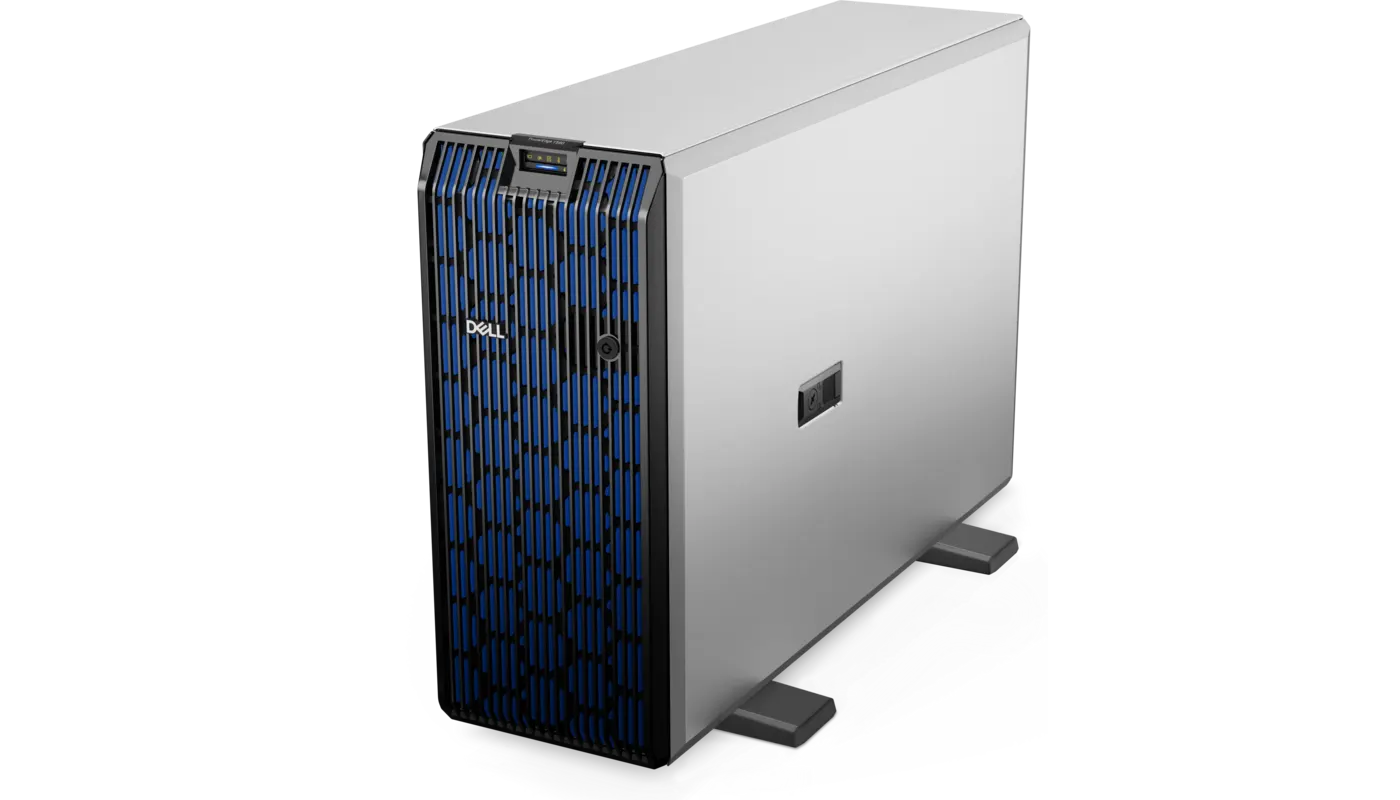
Image: Dell - PowerEdge T560 Tower Server (PowerEdge T560 product photo).
What Rack and Tower Mean
The first letter in a PowerEdge model name is the form factor:
- R: rack server mounted in a 19-inch cabinet (1U, 2U, 4U)
- T: floor-standing tower; some older models (for example T640) could convert to a 5U rack kit
- MX/M: blade/modular
- XE / XR: specialized performance or industrial/edge
Architecture primer: What Is a Dell PowerEdge Server?. Buying framework: PowerEdge Server Buying Guide.
Short definition: A rack PowerEdge sits horizontally in a standard cabinet for density; a tower PowerEdge stands independently in offices and branches that have no rack infrastructure.
Core Differences
| Criterion | Rack (R series) | Tower (T series) |
|---|---|---|
| Chassis | 1U/2U horizontal, 19-inch cabinet | 3U–4.5U vertical, with feet |
| Density | Dozens of nodes in a 42U cabinet | One to three chassis on the floor |
| Install | Rails, PDU, cable management | Outlet, UPS, standalone placement |
| Noise | Assumes a server room | Office-acoustic models exist |
| Cooling | Cabinet aisle / optional DLC | In-chassis air; no DLC |
| Scale | Natural for cluster and HA | One- or two-node scenarios |
| Management | iDRAC9 + cabinet standards | iDRAC9; cabinet not required |
Density example: a 2U R760 is about 86.8 mm high and 482 mm wide. A T560 is 464 mm high with feet, 200 mm wide, and 678.2 mm deep with the bezel. In the same dual-socket class the tower uses more floor space; the rack consumes cabinet U.
R760 vs T560
For a same-generation dual-socket comparison in 2026, R760 (16G 2U rack) and T560 (16G 4.5U tower) are the clearest pair.
| Feature | PowerEdge R760 | PowerEdge T560 |
|---|---|---|
| Form | 2U rack | 4.5U tower |
| CPU | 4th Gen 56 / 5th Gen 64 cores | 4th Gen 32 / 5th Gen 28 cores |
| Max CPU TDP | 350 W; optional DLC | 250 W; air cooling |
| Memory | 32 DDR5 DIMMs, up to 8 TB | 16 DDR5 DIMMs, up to 1.5 TB |
| Memory speed (1DPC) | 5600 MT/s (5th Gen) | 5200 MT/s (5th Gen) |
| Front drives | 12 × 3.5 or 24 × 2.5; E3.S | 12 × 3.5 or 24 × 2.5 |
| PCIe | Up to 8 slots, Gen4/Gen5 | 6 slots, 2 × Gen5 FHFL |
| GPU | 2 × 350 W DW or 6 × 75 W | 2 × 300 W DW or 6 × 75 W |
| Network | LOM/OCP or MIC/DPU | 2 × 1 GbE LOM + OCP 3.0 |
| Management | iDRAC9 | iDRAC9 |
R760 details: Dell PowerEdge R760 Review. 1U alternative: R650 review. 15G 2U: R750 review.
Drive and RAID choices are independent of form factor: RAID Best Practices.
Pro Tip: T560 is not a “weaker server”; CPU SKUs and DIMM count are capped by office thermal and acoustic limits. If the same workload will grow to 8–16 nodes, the R series wins on TCO.
Noise, Cooling, and Power
Dell positions the T560 with office-friendly acoustics. That holds for GPU-free, mid-TDP configurations. Two 300 W GPUs or HPR fans push a tower to server-room noise levels.
On rack systems, fan noise is an expected cost; the real risk is a closed closet with poor airflow. R760 SKUs that need 350 W CPUs or DLC do not belong under a desk.
Calculate together before you buy:
- CPU TDP and heatsink/fan class
- GPU acoustic/thermal kit if present
- PSU wattage and
1+1redundancy - PDU phase in a rack; UPS output for a tower
- Room acoustic limit (dBA)
Energy planning: PowerEdge Power Consumption.
Which Environment Fits Which?
| Scenario | Recommendation |
|---|---|
| No cabinet, office/branch, one server | T160 or T360 |
| Branch virtualization, 1–2 nodes, quiet | T560 |
| Data center, 4+ nodes, HA cluster | R660/R760 or 17G R670/R770 |
| High drive + PCIe in 2U | R760 / R750 |
| Dense 1U virtualization | R650 / R660 |
| GPU inference, one office chassis | T560 (watch acoustics) |
| GPU density and DLC | R760xa / XE, not a tower |
Install steps change with form factor; iDRAC does not: PowerEdge Installation Guide, What Is iDRAC?.
T160, T360, and T560
Do not treat the tower family as one model:
| Model | Typical role |
|---|---|
| T160 | 3U, single socket, SMB/near-edge, compact filtered bezel |
| T360 | 4.5U, single socket, more drives/PCIe |
| T560 | 4.5U, dual socket, enterprise tower ceiling |
T160 is enough for file services, a backup target, and a small domain controller. T560, with dual Xeon and 24 SFF, approaches a “mini data center” in an office. If you will be at 6–8 servers in three years, R series plus a 42U cabinet is cheaper from day one.
Common Buying Mistakes
- Putting a 2U rack in an office: noise and heat complaints follow.
- Starting with a tower and hitting 10 nodes in 12 months: floor and cable chaos.
- Assuming T560 takes the same CPU SKUs as R760: 64 cores are not on T560.
- Calling a GPU tower “quiet”: Dell warns that GPU systems raise fan acoustics.
- Comparing chassis price only and omitting cabinet cost.
- Leaving iDRAC Enterprise and 3–5 years of ProSupport out of TCO.
Firmware discipline is the same on both forms: How to Update Firmware.
The 2026 Buying Decision
Decision tree:
- How many physical servers in 36 months?
- Cabinet room or office?
- What is the dBA limit?
- Do you need dual sockets and more than 1 TB of RAM?
- Is there a cluster/HA requirement?
1–2 nodes, no cabinet, quiet first: T series. 4+ nodes, HA, standard operations: R series.
The quote should state:
- Form factor and U height
- Rail kit / feet / casters
- PDU or UPS capacity
- Fan/heatsink and GPU acoustic kit
- iDRAC9 license level
- ProSupport term
Pros and Cons
| Rack strengths | Tower strengths |
|---|---|
| High density and clustering | Fast install without a cabinet |
| Standard PDU/UPS/cabling | Office-acoustic models |
| Higher CPU/DIMM ceiling (R760) | Easier physical service access |
| DLC and dense GPU options | Lower small-branch TCO |
| Rack limits | Tower limits |
|---|---|
| Cabinet, rails, aisle investment | Space and cabling as you scale |
| Office noise | Lower CPU/DIMM ceiling |
| Higher first infrastructure cost | Weaker cluster standard |
Checklist
- Three-year node count written down.
- Environment: cabinet room or office?
- dBA and heat limits measured.
- R vs T decided, then T160/T360/T560 or R660/R760.
- CPU core ceiling matches licensing.
- DIMM slots and growth headroom clear.
- Drive backplane and boot (BOSS) separated.
- GPU acoustic/thermal kit on the quote if needed.
- iDRAC9 and ProSupport level defined.
- Cabinet/PDU/UPS cost included in TCO.
Next Step with Leon-X
Leon-X plans PowerEdge placement from form-factor and BOM validation through Enterprise Server Hardware Procurement and Server Installation, Configuration and Commissioning. For discovery, contact us.
Frequently Asked Questions
What do R and T mean on Dell PowerEdge?
R is rack (cabinet-mounted); T is tower (floor-standing). They share the iDRAC family; chassis, cooling, and scale differ.
Is rack or tower cheaper?
A single tower is usually cheaper to start because you skip cabinet and rails. At 4+ nodes, rack wins TCO on cost per U and operational standards.
Is T560 just a tower R760?
No. T560 is a dual-socket 16G tower, but CPU tops out at 32/28 cores, memory at 16 DIMMs, and PCIe at 6 slots. R760 offers 64 cores, 32 DIMMs, and 8 PCIe slots.
Can a rack server sit in an office?
Small quiet-room 1U entry systems sometimes work; high-TDP/GPU 2U racks do not. For offices, T160/T360/T560 is the safer default.
Can a tower convert to rack later?
Some older models (T640) had a 5U rack kit. T560 is primarily a 4.5U tower; do not plan on “we will rack it later”—lock the form factor on day one.