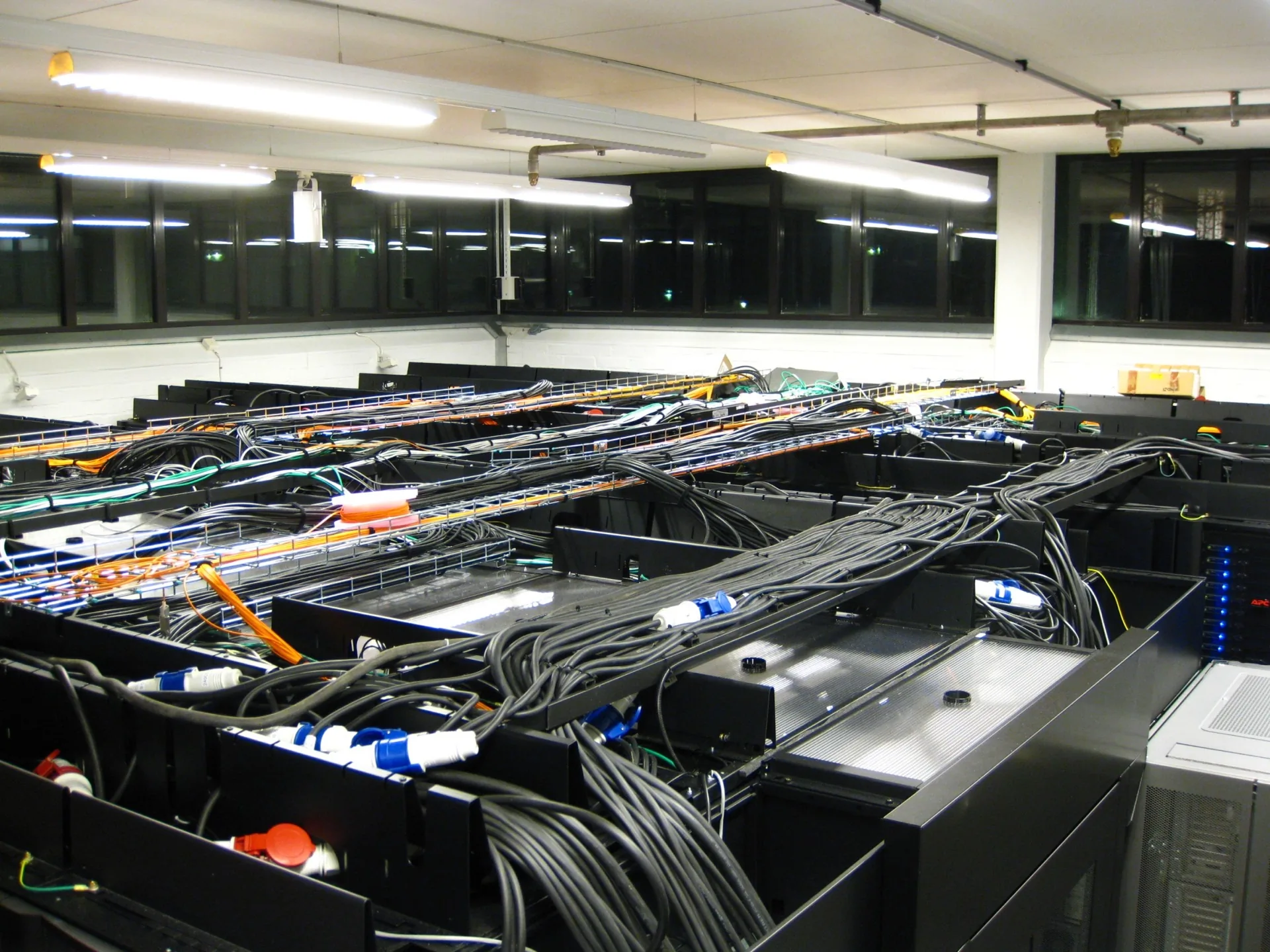
A Dell PowerEdge Server is Dell Technologies’ enterprise x86 server family, combining compute, memory, storage path (PERC/RAID or HBA), networking, and the iDRAC management plane in one platform. Short answer: PowerEdge is not “just a server box”—it is an architecture where compute, storage path, out-of-band management, and power/thermal design work together. Correct model choice starts with workload (VM, DB, file, AI/edge) and form factor (rack/tower).
This guide is written for:
- Infrastructure and systems admins evaluating PowerEdge
- Architects planning virtualization / database / file servers
- Teams that will operate with iDRAC and Lifecycle Controller
- Decision makers placing ISO 27001 / KVKK technical controls at the server layer
Quick Summary
- PowerEdge = compute + PERC/disk path + iDRAC OOB + PSU/thermal package.
- Rack (R) fits dense data centers; tower (T) fits branch/office scenarios.
- Modern PowerEdge operations are incomplete without iDRAC.
- RAID/disk choice follows workload: RAID Best Practices.
- Power and capacity need separate planning: Power Consumption.
- Hardening: ISO 27001 PowerEdge.
Table of Contents
- What Is Dell PowerEdge?
- Architecture Layers
- Form Factor: Rack vs Tower
- CPU, Memory, and Expansion
- Storage: PERC, Disks, and Backplane
- iDRAC and Lifecycle Controller
- Power, Thermal, and Networking
- Typical Use Cases
- Most Common Mistakes
- Related Articles
- Checklist
- Next Step with Leon-X
- Frequently Asked Questions
- Sources
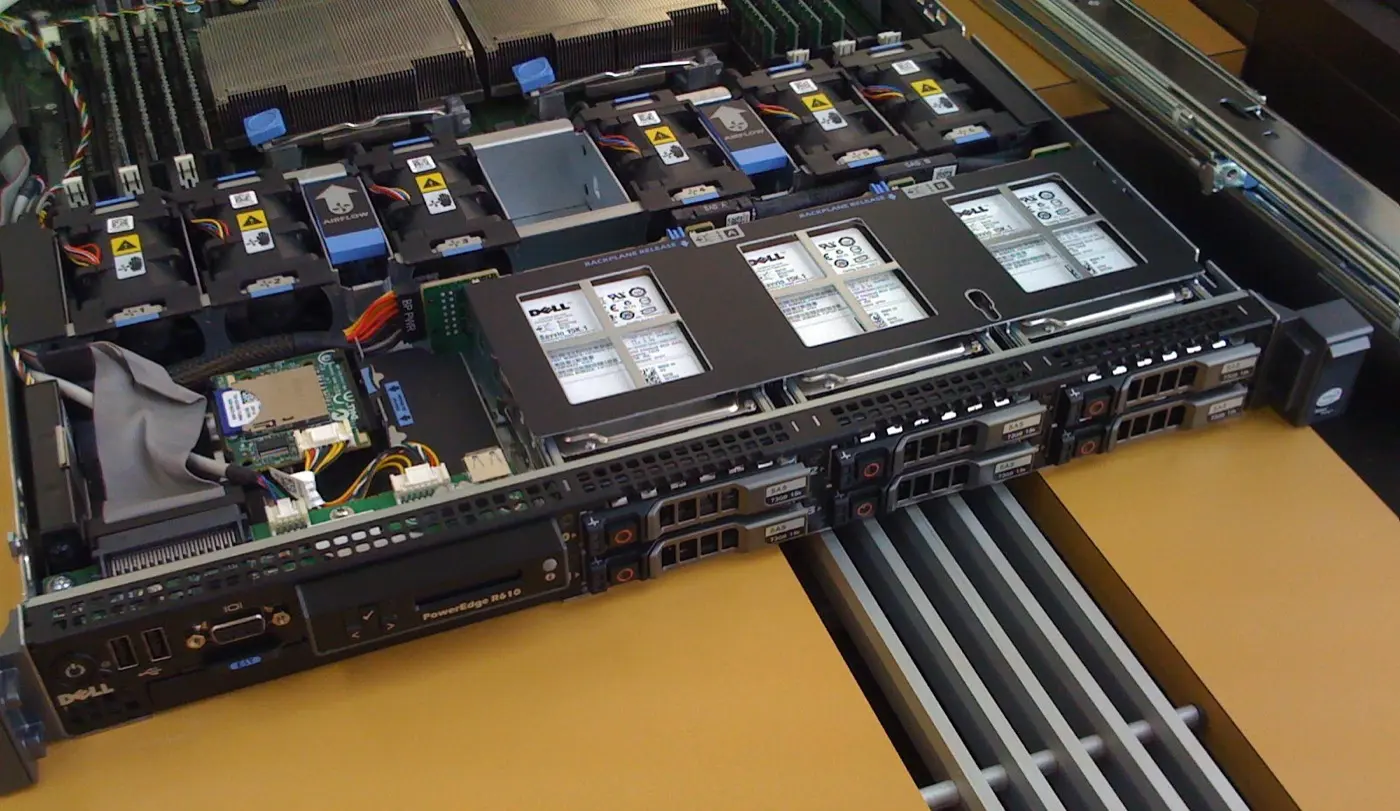
Image: Wikimedia Commons - Dell PowerEdge R610 (example rack PowerEdge form factor).
What Is Dell PowerEdge?
Dell PowerEdge is a server platform built for enterprise workloads. Across generations the shared spine stays: system board, CPU sockets, DIMM channels, PERC/HBA, hot-swap disk backplane, redundant PSUs, and iDRAC out-of-band management.
Short definition:
A Dell PowerEdge Server is Dell’s x86 enterprise server family that delivers institutional compute with a RAID/disk path and redundant power options, managed through iDRAC.
Architecture Layers
| Layer | Components | Operational impact |
|---|---|---|
| Compute | CPU, DIMM, PCIe | VM density, DB latency |
| Storage path | PERC/HBA, backplane, SAS/SATA/NVMe | IOPS, RAID resilience |
| Management | iDRAC, Lifecycle Controller | Remote install, firmware, logs |
| Power/thermal | PSU, fans, DAPC | Energy, noise, rack density |
| Network | LOM / OCP / PCIe NIC | Bandwidth, failover |
Layers can look “good” in isolation; if they are not sized together, bottlenecks appear (e.g. strong CPU + slow RAID5 SATA).
Form Factor: Rack vs Tower
| Form | Typical use | Note |
|---|---|---|
| Rack (R series) | Data center, cluster, high density | 1U/2U common |
| Tower (T series) | Branch, office, quieter rooms | Some models rack-mountable |
| Modular / blade-like | Dense compute | Chassis-dependent |
Dense virtualization usually means rack; a single office file/DC role may fit tower. Workload + cooling + rack-U limits decide.
CPU, Memory, and Expansion
- Dual-socket models scale; single-socket can win on TCO
- Ignoring memory channel/population rules drops speed
- PCIe generation (Gen4/Gen5) matters for GPU, NVMe, fast NICs
- Separating boot (BOSS/M.2) from data RAID is good practice
For memory/boot issues: Boot Failure, BIOS Boot Loop.
Storage: PERC, Disks, and Backplane
The PowerEdge storage path usually flows: disk → backplane → SAS cable → PERC → OS/hypervisor.
- RAID mode: redundancy + cache policy
- HBA/pass-through: software RAID or SDS (vSAN, etc.)
- Disk type balance: SAS / SATA / NVMe — Disk Types, NVMe Setup
- Foreign config / detection: RAID Disk Detect, Foreign State
Pro Tip: Put OS boot on BOSS/M.2 and data on PERC RAID. Reinstalls and disk swaps get safer.
iDRAC and Lifecycle Controller
iDRAC (Integrated Dell Remote Access Controller) is out-of-band management: power, console, sensors, inventory, logs—even when the OS is down.
With Lifecycle Controller you can:
- Deploy OS images
- Update firmware/BIOS
- Run inventory and diagnostics
Security: iDRAC Security for ISO 27001. Troubleshooting: iDRAC Not Responding, iDRAC Reset. Audit: PowerEdge Audit Log ISO.
Power, Thermal, and Networking
- Redundant PSU (
1+1) is standard for critical workloads - System profile / power cap for energy management: Power Consumption
- Fan policy balances noise and temperature
- LOM + optional OCP/PCIe NIC; keep the iDRAC management network off the data plane
Typical Use Cases
| Workload | Architecture emphasis |
|---|---|
| VMware / Hyper-V host | CPU/RAM density, RAID10 or NVMe cache |
| SQL / OLTP | Low-latency disks, Write Back + healthy cache |
| File / backup | Capacity, RAID6, expansion bays |
| Edge / branch | Tower, quieter fans, iDRAC Express/Enterprise |
Most Common Mistakes
- Exposing iDRAC to the internet
- Filling memory slots randomly
- Mixing OS and data on the same RAID
- Leaving firmware (BIOS/iDRAC/PERC) unpatched for years
- Running databases on the cheapest SATA RAID5
- Keeping management and data on the same VLAN
Related Articles
- Dell PowerEdge RAID Best Practices
- SAS vs SATA vs NVMe
- NVMe Disk Setup
- How to Reduce Power Consumption
- ISO 27001 PowerEdge Configuration
- iDRAC Security for ISO 27001
- Boot Failure
- PowerEdge Audit Log ISO
Checklist
- Workload clear (VM/DB/file/edge) and form factor chosen.
- CPU/RAM sized to channel rules.
- Boot and data disk paths separated.
- PERC mode (RAID/HBA) matches the workload.
- iDRAC on a separate management network; strong password + MFA plan.
- PSU redundancy need evaluated.
- Firmware baseline (BIOS/iDRAC/PERC) defined.
- Audit log and access control planned for ISO/KVKK.
Next Step with Leon-X
PowerEdge architecture is layer balance—not an order code. Under Hardware & Software Services, Leon-X sizes and standardizes PowerEdge, RAID, and iDRAC via Server Installation, Configuration and Commissioning and High Availability Server Infrastructure. Start at Contact.
Frequently Asked Questions
What is a Dell PowerEdge Server?
Dell’s enterprise x86 server family, delivering compute, a storage path, and iDRAC management on one platform.
Should I choose rack or tower?
Rack for data-center density; tower for branch/office. Cooling and rack-U limits decide.
Is iDRAC mandatory?
It is embedded in the hardware; Enterprise license features vary by model. Using iDRAC is effectively mandatory for modern operations.
Can I use disks without PERC?
Yes—HBA/pass-through or direct NVMe paths are common for SDS and software RAID.
Is PowerEdge ISO 27001 compliant by itself?
No product certifies you alone; correct configuration and evidence are required: ISO 27001 PowerEdge.